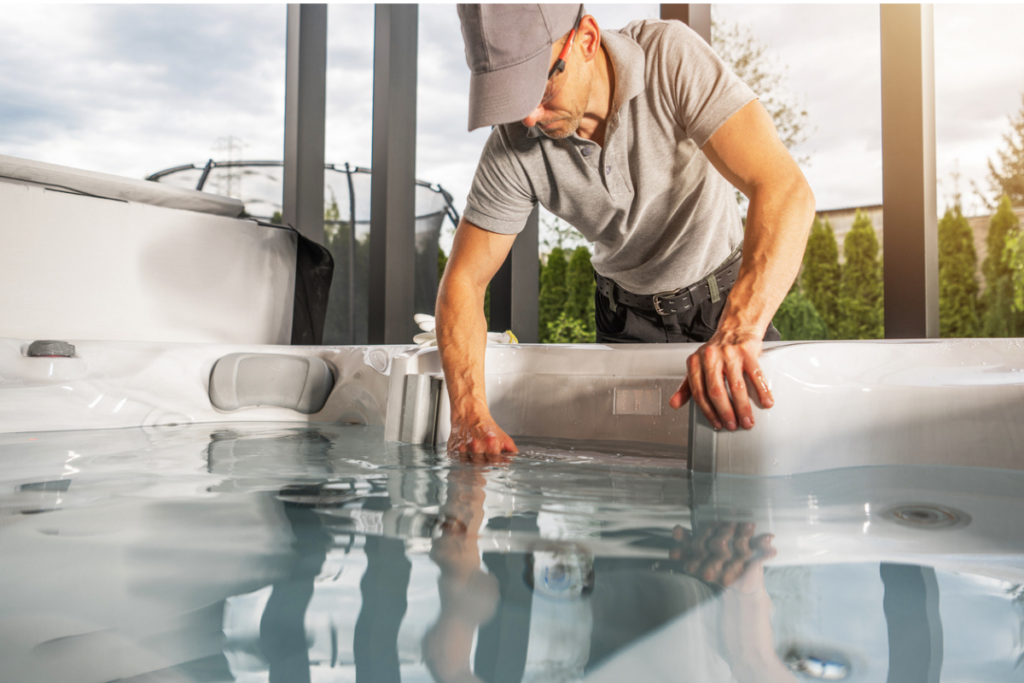
Hot tub regulations for holiday lets: UK compliance guide

The Health and Safety Executive (HSE) sets out hot tub regulations for holiday lets in its HSG282 guidance, but working out exactly how it applies to you can be tricky 

Not to worry! We’re here to simplify the rules and regulations, covering everything from whether building regulations apply to how often to change the water.

Hot tubs for holiday lets: rules, regulations, and care

A hot tub is a huge draw for holidaygoers, but there are lots of practical considerations like water testing, planning, and insurance.

1. Water testing and treatment

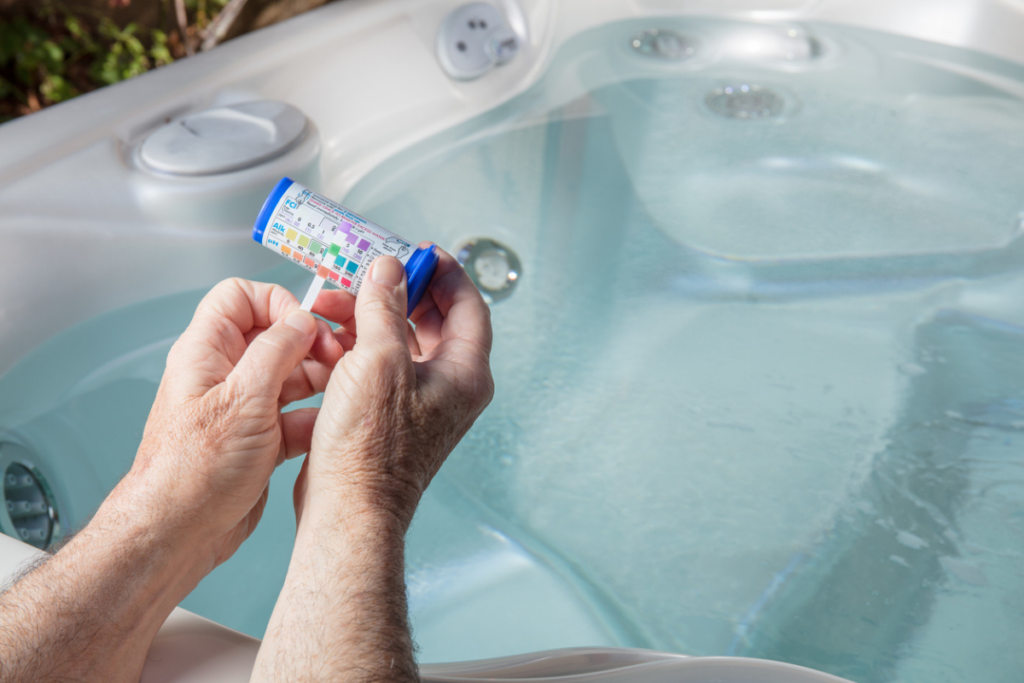
According to the HSG282, you ought to be checking and logging chlorine and pH levels twice daily, depending on usage. 

To maintain clean, balanced water, you should aim for the below figures:

  • Free chlorine: 3-5mg/l
  • Combined chlorine: less than 1.0 mg/l (and less than half of the free chlorine level)
  • Alternative (bromine): 4-6mg/l
  • pH level: 7.0-7.6

Recommended reading: How to increase alkalinity in a hot tub

HSG282 also recommends sending a monthly water sample to a UKAS-accredited lab to test for bacteria (including E. coli and Pseudomonas). Plus, you should have the water tested for legionella every quarter. 
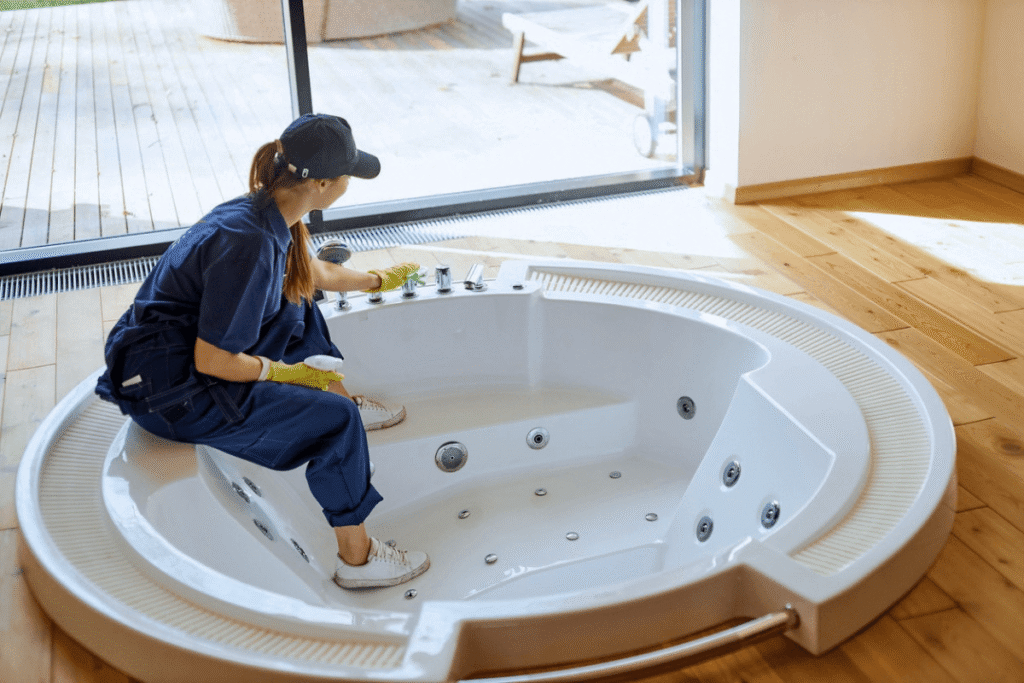
Hot tub maintenance and cleaning

If you don’t use a lab, your records need to show that you’re keeping disinfectant and pH levels in range, changing the water regularly, and cleaning the filters. Lab testing is the only way to confirm the water is free from bacteria, so we’d always recommend it.

On top of that, you should drain the hot tub each week (or between different guests) before cleaning and refilling. 

2. Hot tub building regulations and planning

Usually, a hot tub doesn’t need planning permission.When it comes to building regulations, the main thing is electrics. 

Outdoor hot tubs fall under a specific section of the wiring regulations (BS 7671, Section 702). Essentially, this means you need:

  • A dedicated, hardwired supply
  • 30 mA RCD protection
  • An outdoor isolator switch
  • An electrician who can certify the work

Make sure to keep the certificate on file and never run the tub off an extension lead. Your hot tub also needs a level base, capable of bearing its weight when filled. Our luxury hot tubs stand up to frequent use and their expert engineering ensures durability and safety.
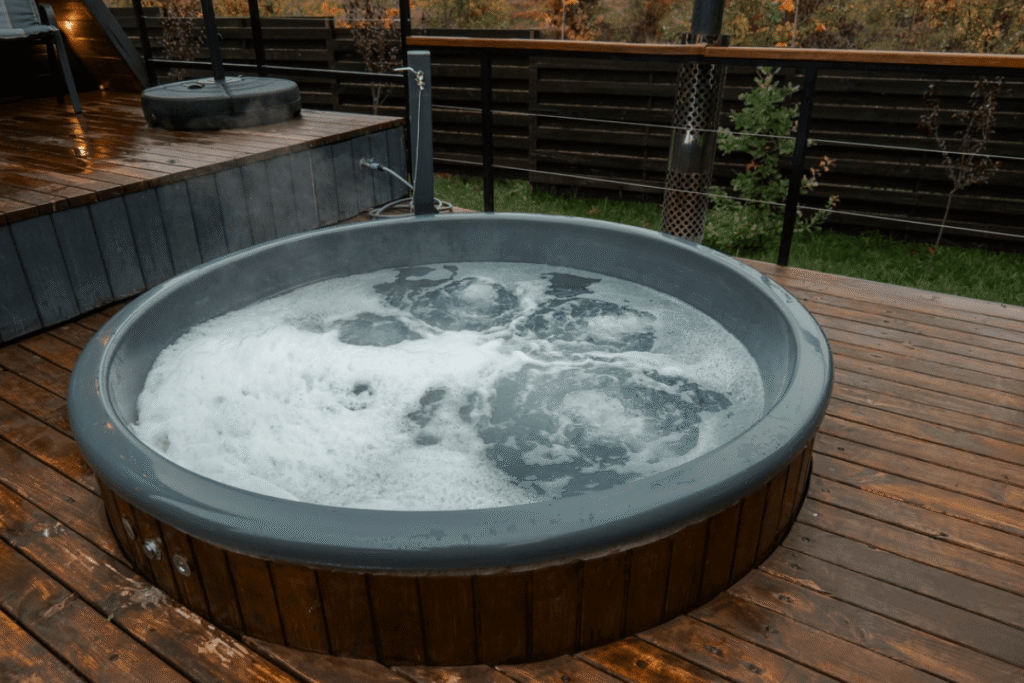
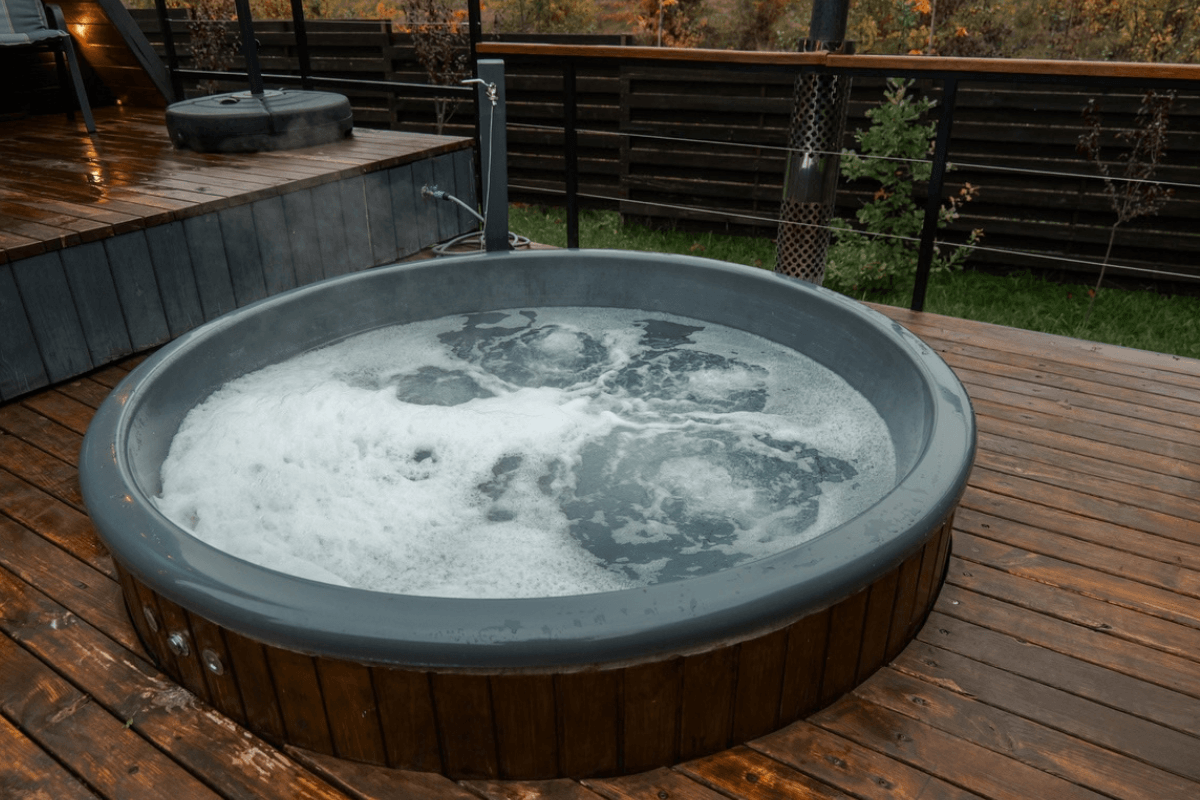
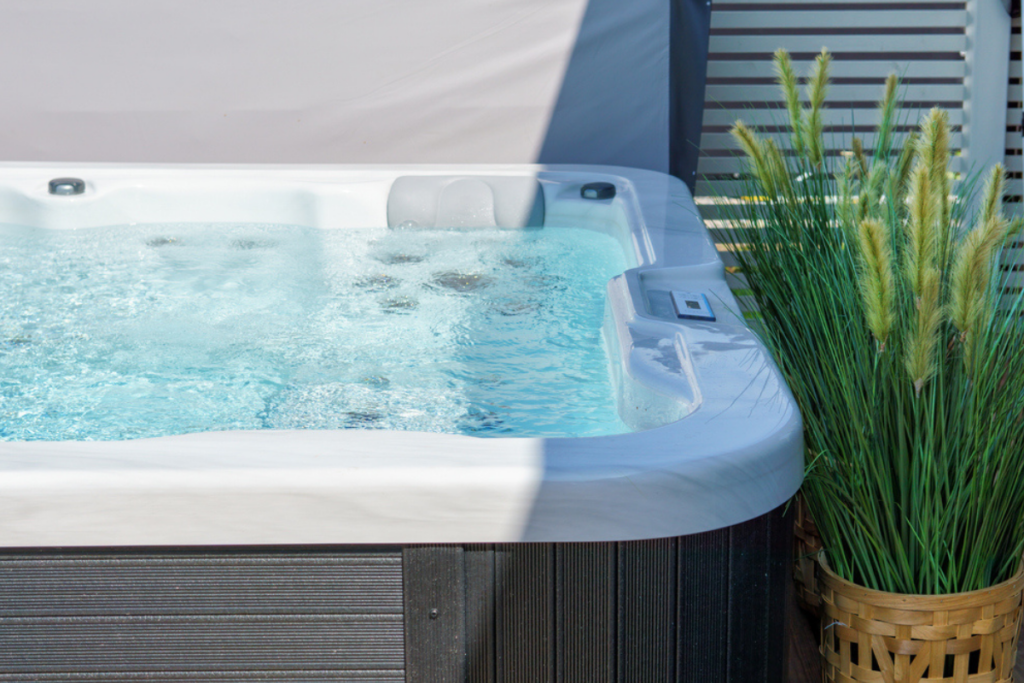
holiday let hot tub on decking

In terms of planning, you won’t need permission unless it’s part of a new structure in your garden or property (e.g. a gazebo, decking, or screening). You’ll also need to check with your local authority if you’re installing a hot tub in a conservation area, National Park, or near a listed building.

3. Hot tub insurance and liability

If you’re thinking about adding a hot tub to your holiday let properties, you’ll need to tell your insurance company about it and check that:

  • Your public liability cover includes guest injury and illness.
  • Your limit of indemnity (the most your insurer will pay out per claim) is high enough. Many insurers suggest at least £2 million for properties with a hot tub.

If a guest ever makes a claim, you must provide records, showing regular checks, water changes, and lab results.

4. Hot tub safety rules for guests

Hot tub safety rules in the UK ensure that guests know how to use the hot tub, look after it, and remain safe. You’ll want to display these clearly and repeat the rules in your welcome book.

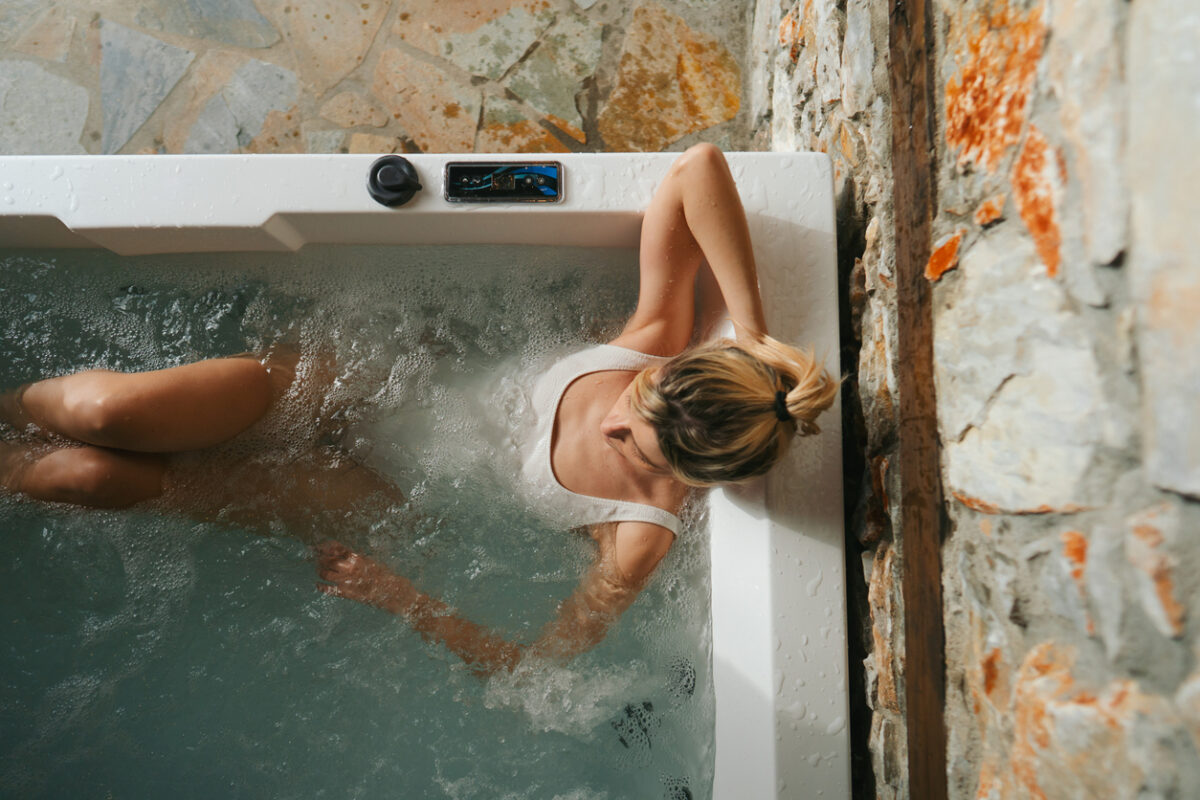
Woman in outdoor hot tub

Here are some common hot tub safety rules you might like to use:

  • Shower before getting in
  • Keep the temperature at roughly 38°C (but don’t exceed 40°C)
  • Supervise children at all times
  • Keep glassware away from the hot tub
  • Check with a doctor first if you’re pregnant or have medical conditions
  • Replace and lock the cover after use
  • Keep noise down after 10pm

We also recommend including a clear instruction to stop using the hot tub if the water looks cloudy or smells strange. 

5. Hot tub maintenance for holiday lets

Holiday let hot tub maintenance good practice boils down to routines and records. Make a list of what you do at each changeover, and what maintenance you carry out every week, month, quarter, and year.

Here’s what to include in your records:

  • Water test readings and water changes
  • Filter cleans and replacements
  • Lab results
  • Incidents (and any actions you took to resolve them)
  • Electrical certificates and risk assessment reviews

The HSG282 says to keep these records for at least five years. If that sounds like a lot to juggle, our hot tub servicing team can handle the whole routine for holiday lets across Cumbria.

Do hot tub rules and regulations in the UK apply to holiday lets?

Yes, the moment you charge guests for a booking, the hot tub counts as a ‘business activity’.
Outdoor hot tub and towels

The legal requirements for hot tubs come from general health and safety law. By following government guidelines for hot tubs in the HSG282 document, you show that you’re keeping guests safe and staying on the right side of the law.

Inspections aren’t typical, but you’ll need to provide evidence of a risk assessment if someone falls ill. And there are real consequences for non-compliance. For example, JTF Wholesale was fined £1m after a hot tub caused a Legionnaires’ disease outbreak.

We don’t want you to panic, but it’s important to know that responsibility sits with you as the owner, even if an agent handles day-to-day maintenance. 

Checklist: Is your holiday let hot tub compliant?

To keep your holiday let hot tub compliant with UK rules and regulations, you’ll need to refer to the HSG282. Here’s a quick recap of what you’ll need to do:

  • Get a written risk assessment done (and review it at least annually)
  • Write down operating procedures (and name a trained person to carry them out)
  • Check disinfectant and pH levels (and log the readings)
  • Drain and refill the hot tub weekly or between guests (and log each change)
  • Book monthly lab tests and quarterly legionella tests 
  • Get the electrics certified and keep hold of the certificate
  • Put up guest safety signs (and add rules to your welcome book)
  • Tell your insurance company about the hot tub
  • Keep all records for at least five years

Get expert help and support from Cumbria Hot Tub Services

Hot tub regulations for holiday lets can seem daunting, but most of it comes down to keeping strict routines and records. You need to ensure compliance with the HSG282 and carry out hot tub maintenance.

If it sounds like a lot to handle, our hot tub servicing team is happy to help. Let us fine-tune your hot tub settings, help you stay HSG282 compliant, and keep your water clean and safe. Get in touch with our team today!


What temperature should a hot tub be?Advice and guidance for hot tub owners

You’re ready to relax in your hot tub, but before you climb in, there’s one important setting to check: the water temperature.

Set the temperature too low, and it may not be the relaxing experience you want. Too high, and it could become uncomfortable or even unsafe.

So, what temperature should a hot tub be?

Luckily, finding the right temperature is straightforward once you understand the recommended ranges for different users and situations. 

In this guide, we explain the ideal hot tub temperature, safety considerations, and how to adjust your settings for the best experience.

What is the ideal hot tub temperature?

The ideal hot tub temperature for most adults is between 37°C-40°C, with 38°C widely considered the sweet spot for comfort, relaxation, and therapeutic benefits.

Within this temperature range, the water in a hot tub:

  • Is warm and soothing
  • Helps relax muscles
  • Improves circulation
  • Creates a comfortable soaking experience 

The exact temperature you choose for your hot tub is down to your personal preference, the weather, and how long you plan to spend in the water.

What temperature do hot tubs come set at from the factory?

Most hot tubs leave the factory with a default temperature setting of around 38°C. Manufacturers choose this temperature because it suits the majority of users while remaining within recommended safety guidelines.

As a new hot tub owner, you may want to adjust the temperature slightly depending on your preferences. Some people prefer a cooler soak, while others enjoy a warmer experience, particularly during colder months. Adjusting the temperature is a normal part of hot tub ownership and can be done easily through the control panel.

Is 40°C too hot for a hot tub?

No, 40°C is not too hot for a hot tub. But it is considered the maximum recommended hot tub temperature for healthy adults, by manufacturers and industry bodies, including BISHTA.

While a 40°C hot tub can feel extremely relaxing, it may become uncomfortable during longer soaking sessions. Certain individuals should exercise additional caution, including:

  • Older adults
  • Pregnant women
  • Individuals with high blood pressure or heart conditions
  • Anyone feeling unwell or dehydrated

BISHTA also advise that if you’re soaking at 40°C, you should limit your session length to 15 minutes and stay well hydrated. If the water feels excessively hot, lowering the temperature by just one or two degrees can make a noticeable difference.

As a general guide, soak times can be shortened as the temperature increases.

What temperature should a hot tub be for children?

The recommended maximum hot tub temperature for children under 12 is 36°C, though it’s best kept closer to 35°C where possible. BISHTA advises against children under 4 using a hot tub at all. While the RLSS sets this at under 5, both agree that very young children are most at risk, as they can’t yet recognise or communicate when they’re overheating.

Children’s bodies heat up faster than adults’. This makes them more prone to overheating. To help keep children safe:

  • Keep the temperature at or below 35°C
  • Limit soak times to 10-15 minutes
  • Ensure children take regular breaks
  • Encourage plenty of hydration before and after use
  • Supervise children at all times, both for overheating and drowning risk

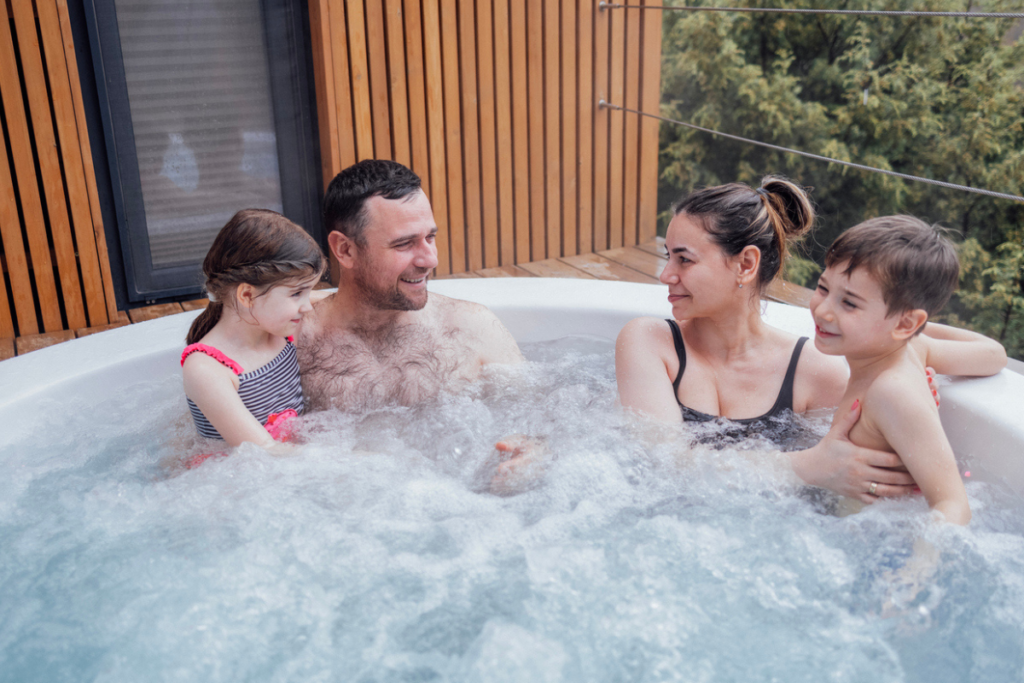
Before a family hot tub session, lower the temperature. This makes it safer and more comfortable for everyone.

What affects how quickly a hot tub heats up?

The temperature outside, the size of the hot tub, and its heating system all influence how long it takes a hot tub to heat. Let’s examine those factors, and others, in more detail.

Factor Description
Ambient temperature The outside air temperature has a significant impact on heating times. During colder weather, your hot tub loses heat faster and requires more energy to warm up.
Hot tub size and water volume Larger hot tubs naturally contain more water, which means they take longer to heat than smaller models. For example, a compact two-person spa may heat considerably faster than a large family-sized tub.
Insulation quality Well-insulated hot tubs hold heat better. This cuts heating times and boosts energy efficiency. Premium insulation can also help lower ongoing running costs.

Find out more about how much it costs to run a hot tub (and how to keep costs down).
Keeping the cover on A high-quality hot tub cover plays an essential role in retaining heat. Leaving the cover off while the tub is heating can significantly increase the time required to reach the desired temperature.
Heating system performance A well-maintained hot tub heater, pumps, and filtration system help ensure efficient heating. If your hot tub takes noticeably longer than usual to warm up, it may be worth arranging a professional service inspection.

Can you use a hot tub at a low temperature?

Absolutely. Many hot tub owners enjoy using them at temperatures below the standard 37-40°C range, particularly during warm weather.

Some hot tub users also combine cooler hot tub sessions with a sauna as part of a contrast therapy routine. Lower temperatures still let you enjoy the massage and relaxation benefits of your hot tub, just with a refreshing edge.

Reducing the temperature may also help lower energy consumption during periods of frequent use.

How do I adjust my hot tub temperature?

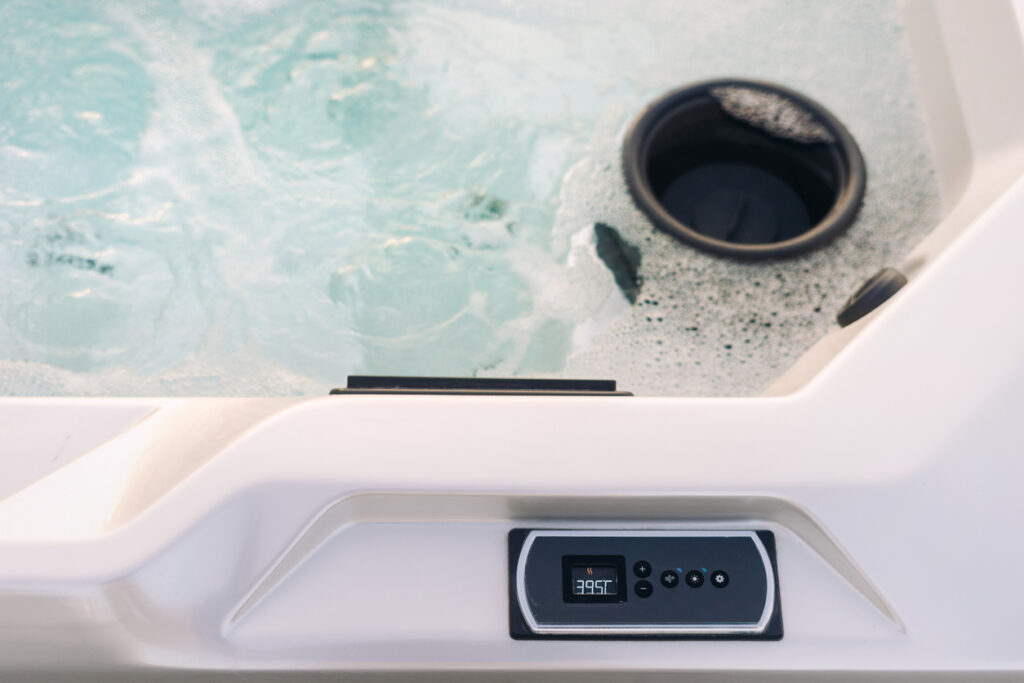
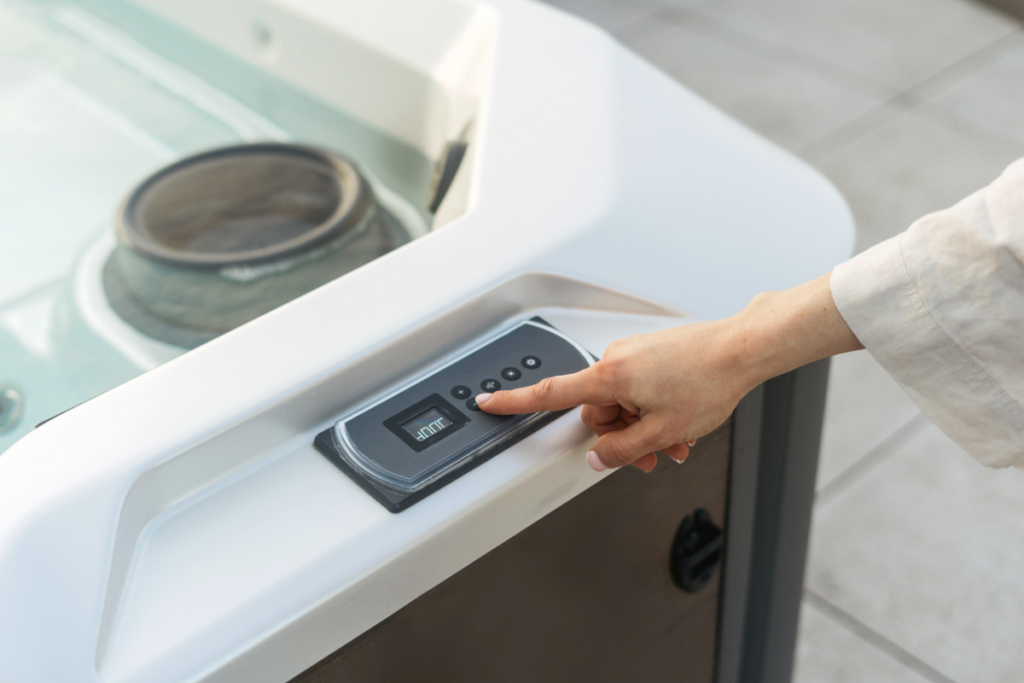
To adjust your hot tub temperature, you need to locate the control panel. Most modern hot tubs feature a digital control panel. This makes temperature adjustments quick and straightforward. Here’s a step-by-step guide:

  1. Locate the control panel. Find the main control panel, usually positioned on the top edge of the spa.
  1. Access the temperature controls. Press the temperature or settings button. Depending on your model, you may see up and down arrows or a dedicated temperature menu.
  1. Select your desired temperature. Increase or decrease the setting until you reach your preferred temperature.
  1. Allow time for heating. Hot tubs typically heat at a rate of around 1-2°C per hour, although this can vary depending on the model, water volume, and weather conditions.
  1. Replace the hot tub cover. Keep the hot tub cover securely fitted while the tub heats to improve efficiency and reduce heat loss.

Get expert support with Cumbria Hot Tub Services 

Getting your hot tub temperature right makes all the difference to your experience. Our hot tub servicing fine-tunes your hot tub settings, and our watercare plans help keep your water clean, safe, and at the perfect temperature. So all you need to think about is relaxing.

And if you’re shopping around, our range of luxury hot tubs features models with smart, precise temperature control for reliable performance all year round. 

Get in touch with the Cumbria Hot Tub Services team today for honest advice and a no-pressure, straightforward service.

How much does it cost to run a hot tub

If you’re thinking about getting a hot tub or already have one, the big question is usually the same: how much does a hot tub cost to run?

The honest answer is that it depends on the size of the hot tub, how well it’s insulated, and how often you use it.

But the good news is that most hot tubs are more efficient than people expect. With the right setup and habits, running costs can be kept very reasonable.

Let’s break it down in a simple, no-nonsense way.

How much does running a hot tub cost​? 

In the UK, the cost of running a hot tub​ is typically:

  • £15 to £40 per week
  • £60 to £160 per month
  • £760 to £1,270 per year 

However, different sources estimate different amounts: 

  • Checkatrade estimates that the average hard-shell hot tub running costs in the UK are around £1 to £2 per day, with an inflatable hot tub costing around £5 per day. 

What affects the cost of running a hot tub?

The biggest driver of hot tub running costs is insulation quality, but day-to-day expenses are also shaped by temperature, usage habits, and how exposed your tub is to the elements.

Let’s look at some of the elements that can affect hot tub running costs in more detail. 

  • Outdoor temperature (winter vs summer). Cold weather means more heat loss, so the heater works harder and runs more often. In warmer months, the tub naturally holds heat better, so costs usually drop.
  • Quality of insulation and cover. A good thermal cover and strong insulation (like foam or a thermal wrap) do a lot of the heavy lifting. They keep heat in and stop the tub from constantly reheating. If either is poor, energy use increases quickly.
  • Insulation quality (built into the tub). This is the underlying design of the hot tub itself. Well-insulated shells and cabinets trap heat far more effectively, while cheaper or older builds let heat escape more easily, even with a good cover.
  • Frequency of use. Every time you use the tub, heat escapes, causing the temperature to drop and the hot tub to use power to heat it. Pumps and filtration also need to be more active in heavily used tubs, so daily use will naturally cost more than occasional use.
  • Desired water temperature. The higher you set the temperature, the harder the system has to work. Even a couple of degrees can make a noticeable difference in energy use over time.
  • Location (wind exposure). Wind is often underestimated for its cooling effect. A sheltered spot helps the tub hold heat, while an exposed garden can cool it much faster, pushing up running costs.
  • Age and efficiency of the hot tub. Older models tend to be less efficient, with weaker insulation and less effective heating systems. Newer tubs are generally designed to retain heat better and use less energy overall.

What are typical hot tub running costs?

When people talk about “hot tub running costs” or “hot tub operating costs”, they’re usually referring to a few key things:

1. Electricity

Hot tub electricity costs include: 

  • Heating the water
  • Running the circulation pump (keeps water moving and filtered)
  • Running the jets when you’re using it

Heating is the main driver here. Once the hot tub is up to temperature, a well-insulated model will generally maintain it rather than constantly reheat it.

Typical cost: £15 to £40 per week (but varies depending on other factors like the type and age of the hot tub and the time of year). 

2. Water care products

You’ll need chemicals to keep the water clean and safe:

  • Chlorine or bromine
  • pH balancers
  • Shock treatments

Typical cost: £10 to £20 per month.

3. Water changes

Most hot tubs need draining and refilling every 2 to 4 months, depending on usage.

Typical cost: £1 to £10 (these costs cover the water and a bit of electricity to heat it back up).

4. Filter replacements and maintenance

Hot tub filters need to be replaced or deep-cleaned regularly to ensure the water stays clean, clear, and free from debris.

Typical cost: £20 to £60 every few months (but varies depending on if you do it yourself, how often you do it, or if you enlist the help of a hot tub expert to handle it for you). 

Side note: If you want to take the hassle out of maintenance altogether, Cumbria Hot Tub Services can help with regular servicing, filter care, and upkeep. 

How to keep hot tub running costs low

Small habits can make a big difference when it comes to keeping hot tub running costs down.

Here’s what actually works:

  • Keep the cover on your hot tub when not in use. A good insulated cover is your best money saver. Heat loss through evaporation is one of the highest hidden costs.
  • Set the temperature and leave it. Constantly turning your hot tub off and on uses more energy than maintaining a steady temperature (usually around 37–38°C).
  • Use economy or sleep mode if available. Most modern hot tubs have energy-saving modes that reduce heating during low-use periods.
  • Keep filters clean. A clogged filter makes the system work harder, which increases electricity usage.
  • Position your hot tub wisely. Wind exposure increases heat loss. A sheltered spot or gazebo can noticeably reduce running costs.
  • Don’t overfill or overheat. More water means more energy needed to heat it, and higher temperatures lead to higher bills. Keep the water levels at the right height (you should have a minimum water line inside the hot tub, or information in the manual) to avoid overspending on heating. 

FAQs about hot tub running costs

Do hot tubs use a lot of electricity?

Not usually. A modern, well-insulated hot tub typically uses around 3–7 kWh per day, depending on weather, usage, and temperature settings. That’s similar to running a few household appliances regularly rather than something extreme.

Jacuzzi running costs compared to hot tubs: Which is cheaper?

“Jacuzzi” is actually a brand name, not a different type of hot tub. In most cases, when people say Jacuzzi, they just mean a standard hot tub or spa.

If you’re comparing options, the running costs are broadly the same. Insulation quality matters more than the name on the tub.

Find out more about the difference between a hot tub and jacuzzi.

Keep your hot tub running costs down with regular maintenance

At Cumbria Hot Tub Services, we help keep the cost of running your hot tub low through regular servicing and maintenance. We keep your system clean and efficient helping you avoid unnecessary energy waste and higher bills.

Get in touch to book your service and start reducing your hot tub running costs.