Low alkalinity is one of the quickest ways to throw your hot tub water out of balance. Once it drops, the pH becomes unstable, water turns cloudy, and your heater, jets and shell become more vulnerable to damage.
The longer you leave it, the worse the problem can get. Fortunately, raising hot tub alkalinity is quick, inexpensive and easy. Here’s exactly how to do it.
Why alkalinity matters for a hot tub
Alkalinity keeps your water steady. When it’s too low, your pH won’t stay put no matter how often you adjust it. A low pH leads to itchy skin, cloudy water and worn-out equipment.
Alkaline low in hot tub? Here are the telltale signs:
- pH reads below 7.2 no matter how often you adjust it
- pH keeps bouncing around even after you’ve corrected it
- Metal fittings, jets or the heater show signs of corrosion or staining
- Water looks cloudy or foams more than usual
- Skin feels dry or itchy, and eyes sting after a soak
Good to know: Rainwater getting into the tub and Trichlor chlorine tablets are both naturally acidic, so they’re common reasons alkalinity keeps dropping again even after you’ve corrected it. If chlorine levels are part of the puzzle too, see our guide on how to lower chlorine in a hot tub.
Here is what happens if you leave low hot tub alkalinity untreated:
- Corrosion. The metal fittings, heaters and pumps in your hot tub wear out faster.
- Etched or pitted surfaces. The acrylic shell of your hot tub can be damaged over time.
- Poor sanitiser performance. Chlorine or bromine works less effectively in acidic hot tub water.
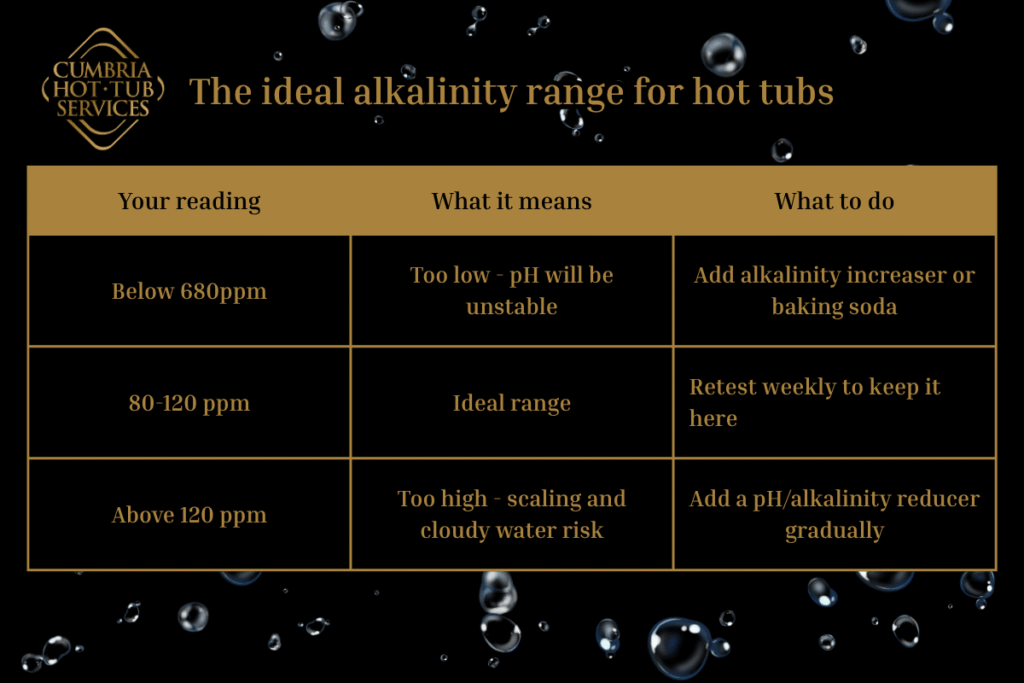
The ideal alkalinity range for hot tubs
The recommended alkalinity range for hot tubs is between 80-120 ppm total, and a pH of 7.2-7.6. Knowing how to adjust alkalinity in your hot tub starts with understanding that alkalinity and pH are linked but not the same. You should always correct your hot tub’s alkalinity first, since fixing pH alone won’t stabilise it if alkalinity is off.
Use the table below to see what your reading actually means and what to do about it:
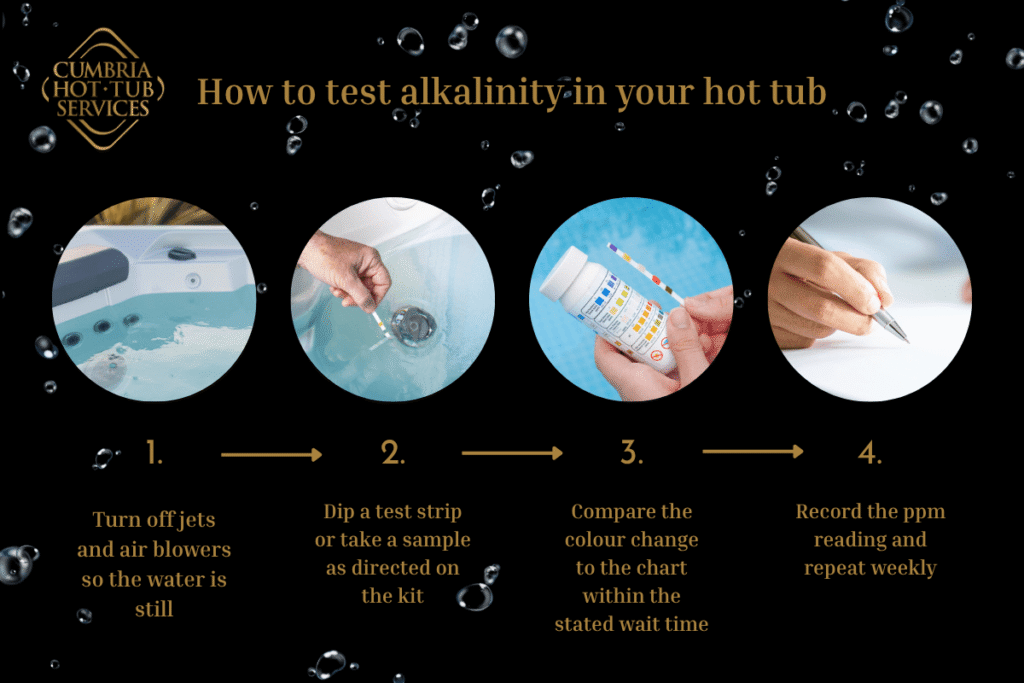
How to test alkalinity in your hot tub
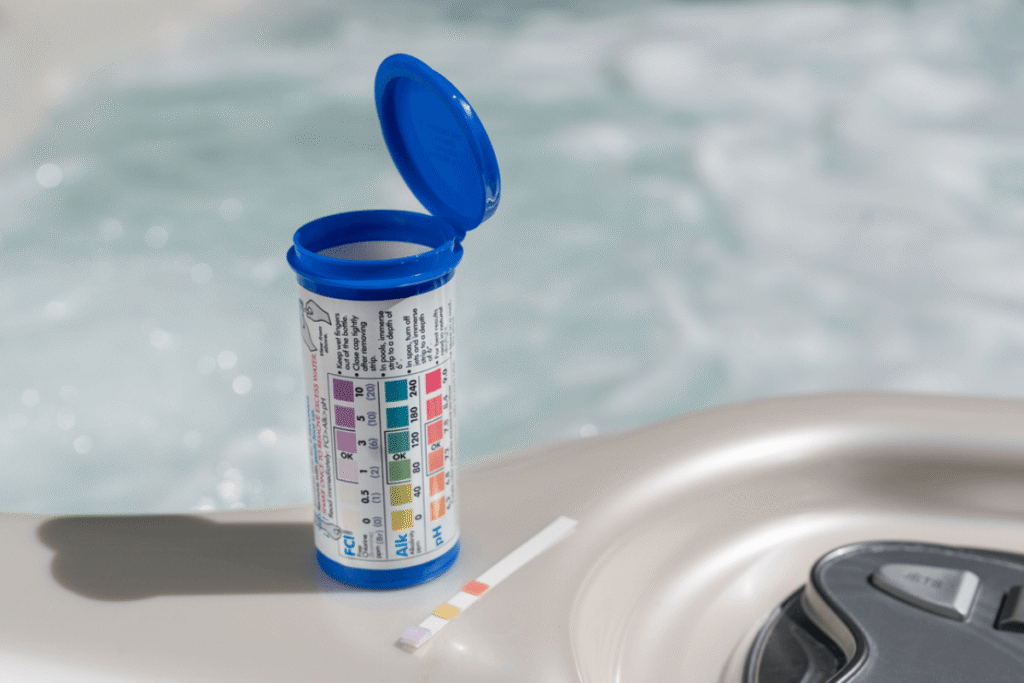
Test the alkalinity of your hot tub with test strips or a digital tester before every chemical addition – never guess the dose.
Here are 4 easy steps to testing the alkalinity of your hot tub:
Top tip: Invest in a digital pH tester which gives a more precise ppm reading if you’re dosing regularly or managing more than one tub.
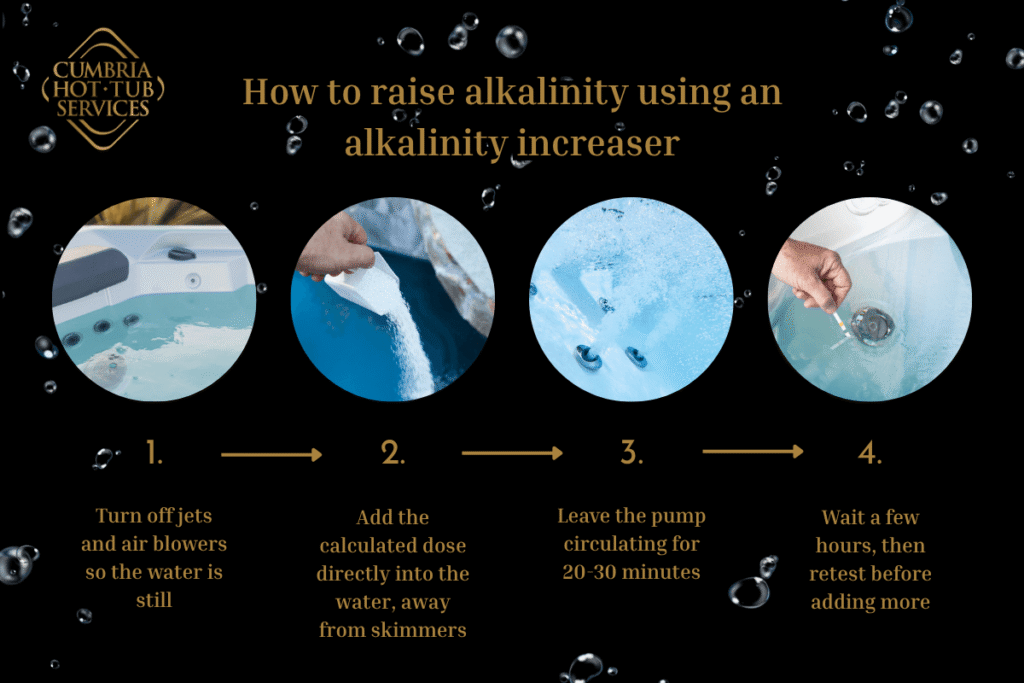
How to raise alkalinity using an alkalinity increaser
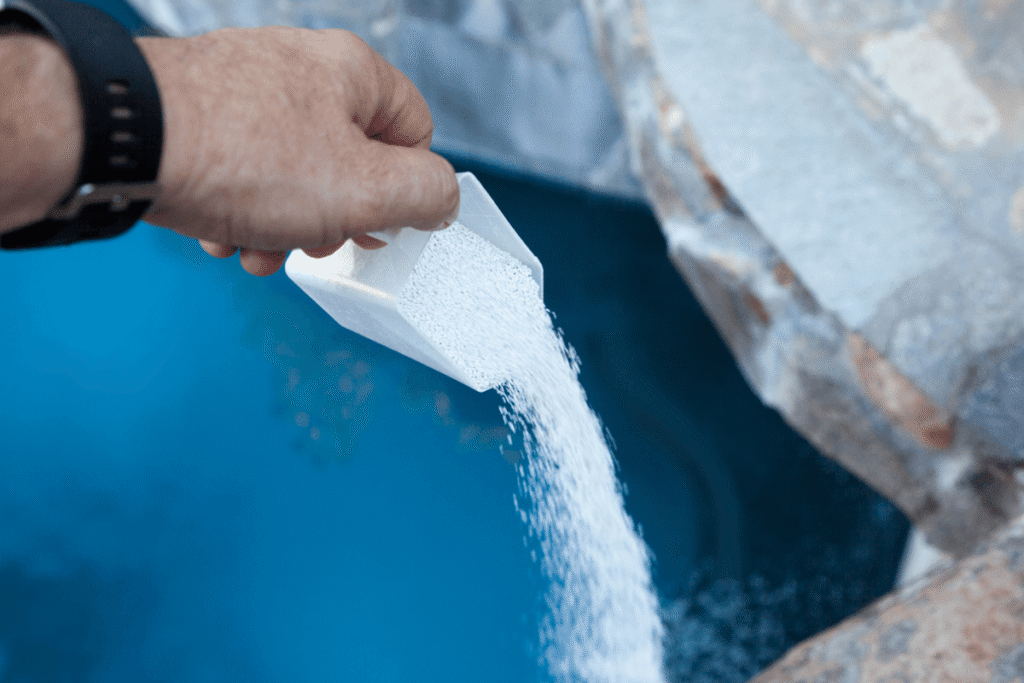
If the alkalinity in your hot tub is low, a purpose-made alkalinity increaser (sodium bicarbonate-based) is the most reliable way to raise it. Follow the product’s dosage guidance for your hot tub’s volume, plus these 4 easy steps:
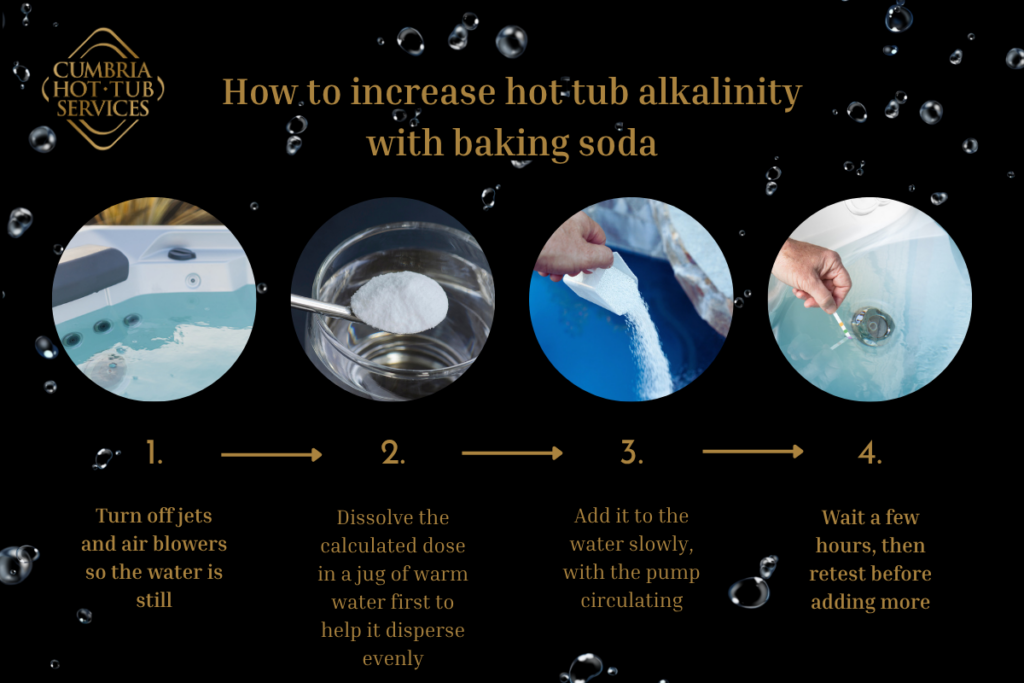
How to increase hot tub alkalinity with baking soda
You can use ordinary sodium bicarbonate to increase the alkalinity of your hot tub in the same way as a shop-bought increaser. This makes it a reliable emergency fix. As a rough guide, 1kg of bicarbonate of soda raises alkalinity by about 10 ppm per 4,000 litres, but always confirm against your tub’s exact volume.
Follow these steps:
Hot tub alkalinity dosage calculator
Use the table below as a quick reference for how much baking soda or increaser to add per 10 ppm rise, based on your hot tub’s water volume.
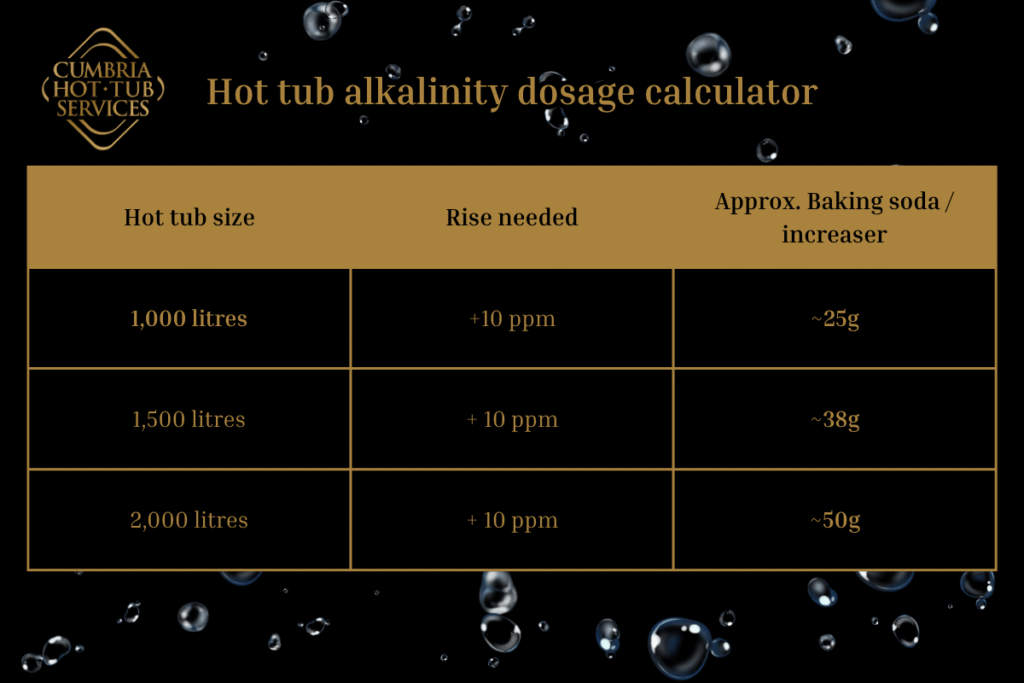
Always check your product label – formulations vary between brands.
Common mistakes when raising alkalinity
Most hot tub alkalinity problems come down to rushing the dosage or skipping the retest. Small, patient adjustments get better results than a single big correction. The mistakes below are the ones we see most often:
- Overdosing in one go. Add half the dose, retest, then top up if needed; a single full dose can push alkalinity too high and trigger the scaling and cloudy water that come with it.
- Adding chemicals with jets running. This causes uneven mixing and foaming.
- Not retesting. Alkalinity can take several hours to fully register on a test, so dosing again too soon risks overshooting into high alkalinity and needing a reducer to bring it back down.
- Ignoring old water. If alkalinity won’t hold after 3-4 months’ use, total dissolved solids may be too high; a full water change often resolves it.
- Relying on Trichlor tablets alone. These tablets are acidic and will keep pulling alkalinity back down; granules or bromine are more pH-neutral.
Related reading: If your pH levels keep drifting no matter what you try, it may point to a filtration or balance issue worth a professional look. Our Hot Tub Servicing page explains how we can help.

Get it right every time with Cumbria Hot Tub Services
Getting the alkalinity of your hot tub right through trial and error wastes both time and chemicals. So why not let a professional handle it for you?
A professional watercare visit with Cumbria Hot Tub Services rules out the guesswork and ensures proper dosing, HSG282-compliant testing for holiday lets, and live updates through our Servicing Portal.
Explore our watercare plans or get in touch for a personalised plan for your hot tub and requirements.