How to reduce alkalinity in a hot tub: safe and effective methods

After a busy weekend, you test the hot tub water and the strip shows 180ppm, the water is cloudy, and the pH won’t come down. If that’s the case, you’re probably wondering how to reduce alkalinity in a hot tub.

The good news is that lowering total alkalinity (TA) in a hot tub is a quick, easy task. The problem is that many people overshoot when they try to raise alkalinity levels. Or, they start adding chemicals without knowing the tub’s TA first.

Here’s how to decrease alkalinity properly and safely, plus common signs, causes, and mistakes.

The ideal alkalinity range for hot tubs

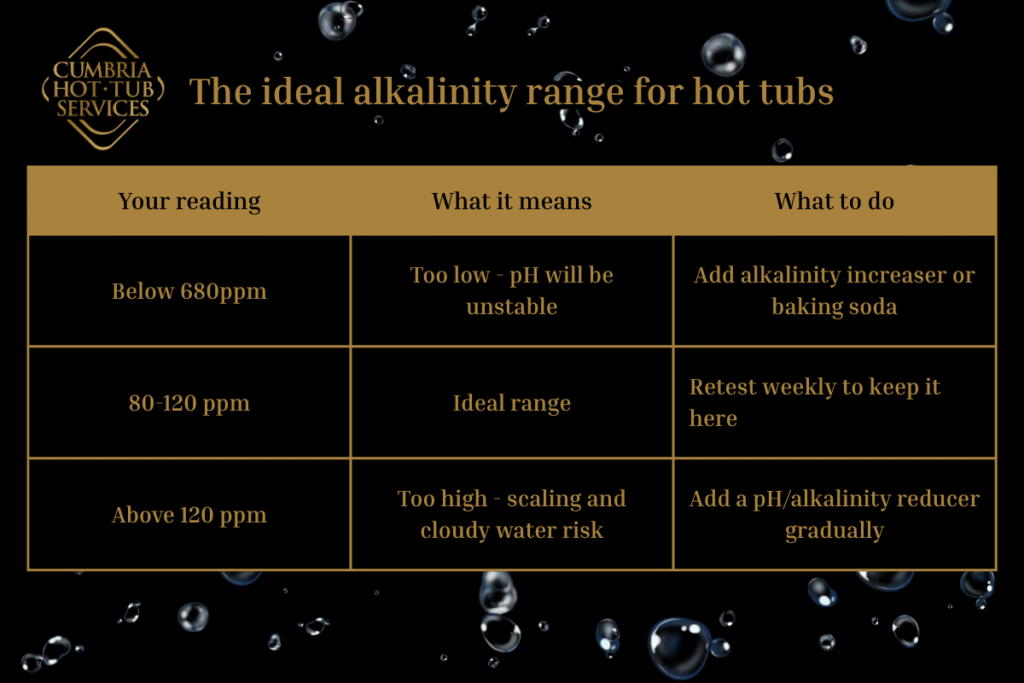
Alkalinity keeps hot tub water balanced and pH levels steady, and it should sit between 80 and 120ppm. 

Once the water is outside this range, it impacts pH (which measures how acidic and alkaline water is on a scale of 1-14). Low alkalinity causes pH to constantly shift, while high alkalinity keeps the pH high (even when you adjust it).

Why is this bad?

Well, if pH is too high or too low, it can irritate skin, turn water cloudy, and corrode heaters and pumps in your hot tub. It can also weaken chlorine and bromine, decreasing sanitation.

If alkalinity is low, you can increase alkalinity using chemicals or baking soda. Too high and you need to add an alkalinity decreaser for hot tubs. We’ll show you how to do this later.

Why alkalinity gets too high in hot tubs (and signs that yours is too high)

If alkalinity is too high in your hot tub, you may have overcorrected and added too much alkalinity increaser or baking soda. 

Here are other causes of high alkalinity in hot tubs:

  • Filling or topping up your hot tub with tap water that contains high levels of minerals and carbonates
  • Sweating or wearing lotion, sun cream, or perfume in the hot tub 
  • Failing to change the water over a long period of time

Most of the mains water in Cumbria comes from Thirlmere and Haweswater and is classed as soft. So if you own a hot tub in this region, high alkalinity is more likely to come from adding too much alkalinity increaser.

If you spot the below signs, you need to lower alkalinity in your hot tub:

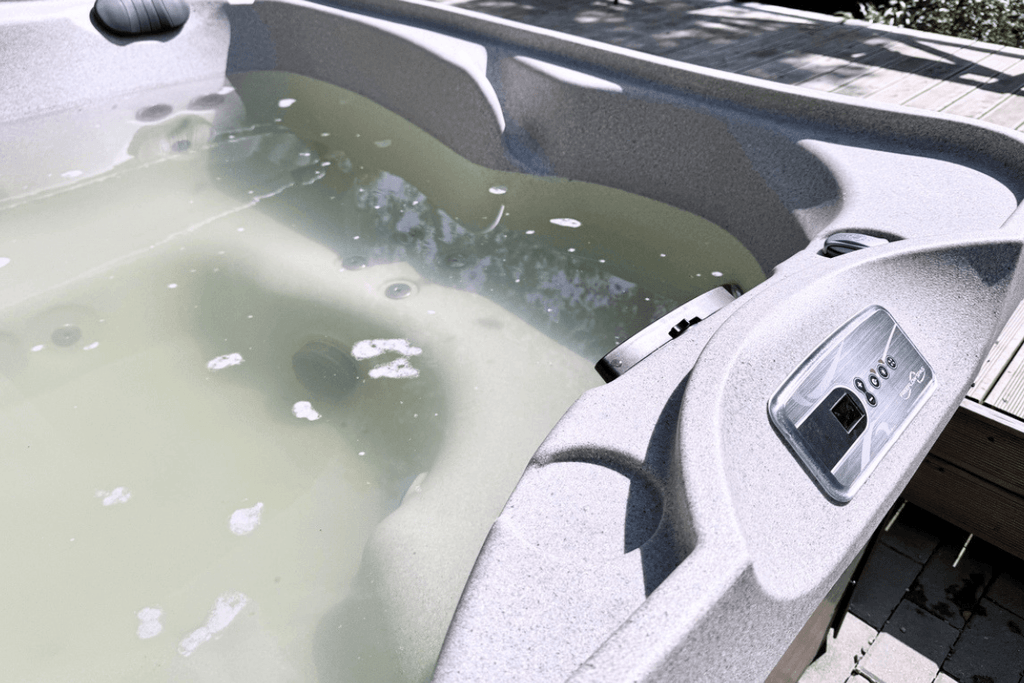
  • Cloudy or murky water
  • Persistently high pH
  • Itchy skin 
  • Crusty mineral buildup on surfaces

How to test alkalinity in your hot tub

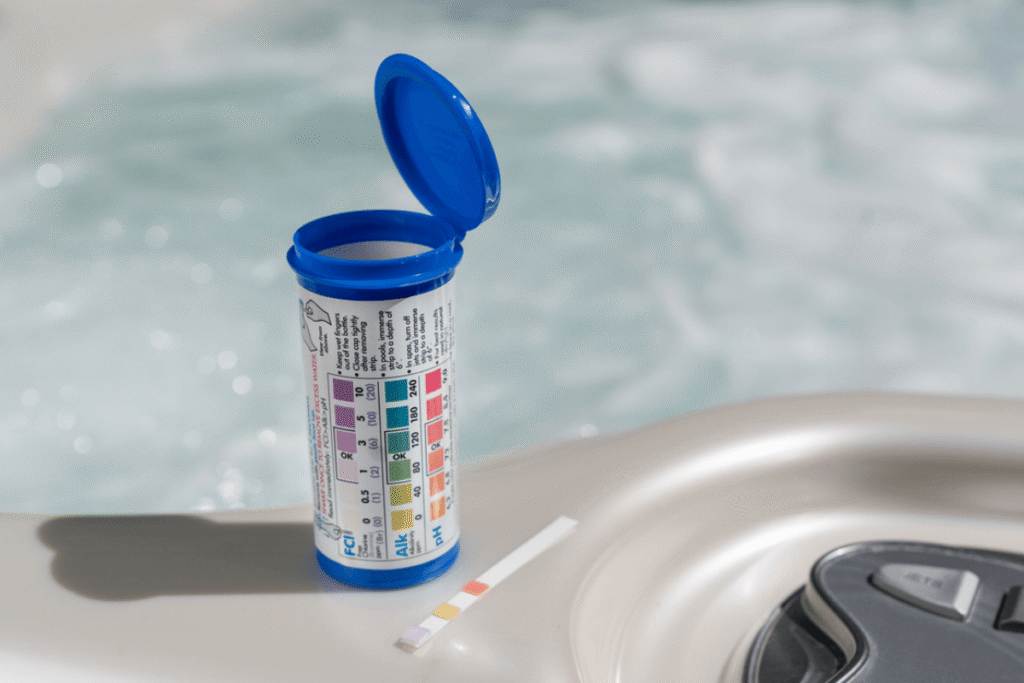
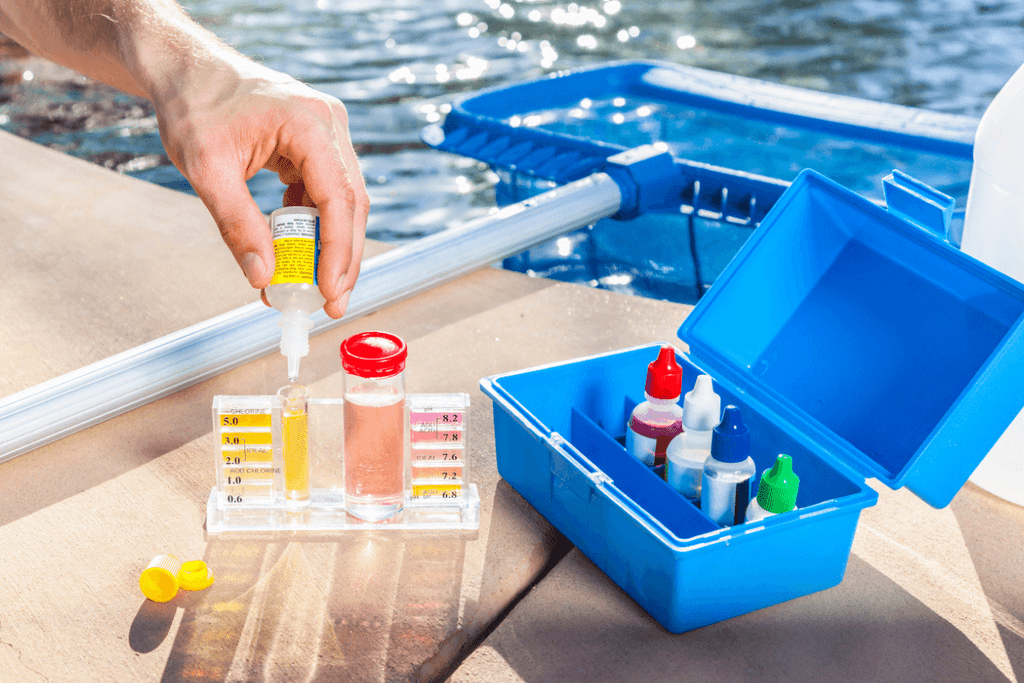
Test strips are a quick, easy way to test alkalinity in your hot tub, perfect for daily or weekly checks. But before dosing, we recommend using liquid drop (titration) kits since these are more accurate.

Whichever method you use, begin by turning off the jets and air blowers for a few minutes so the water is still. 

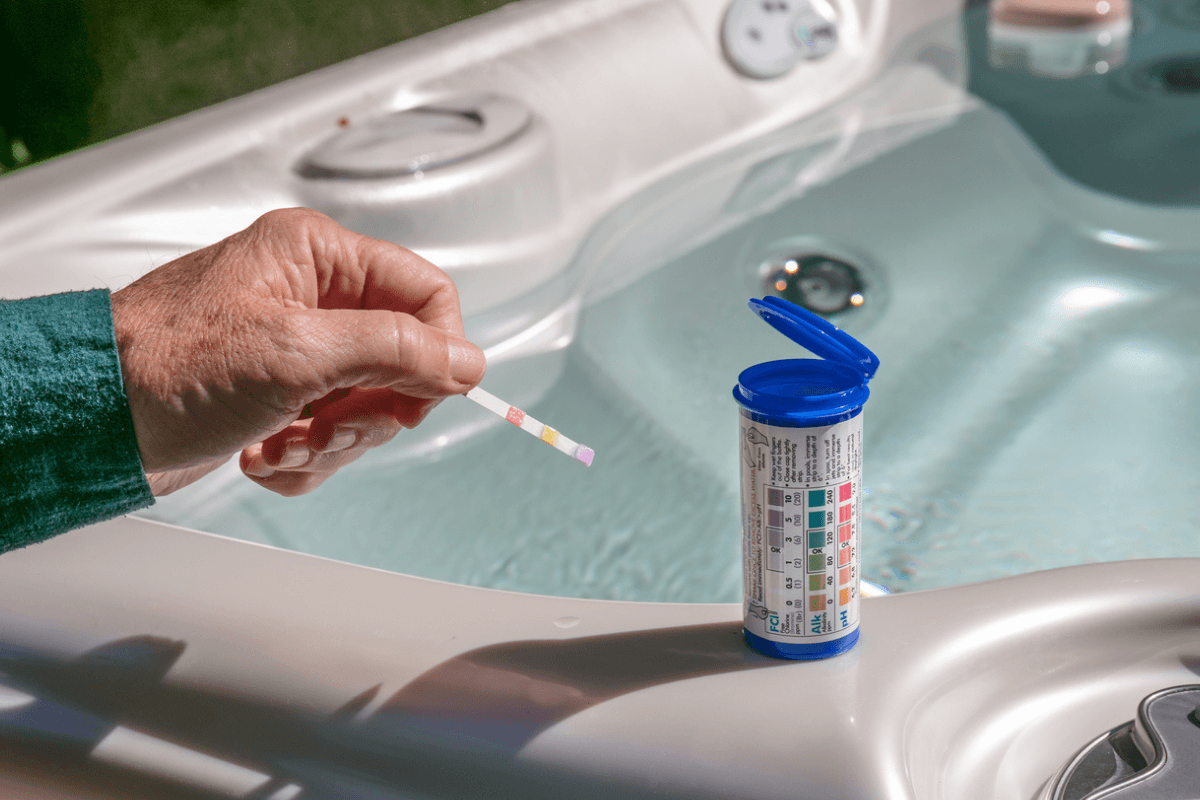
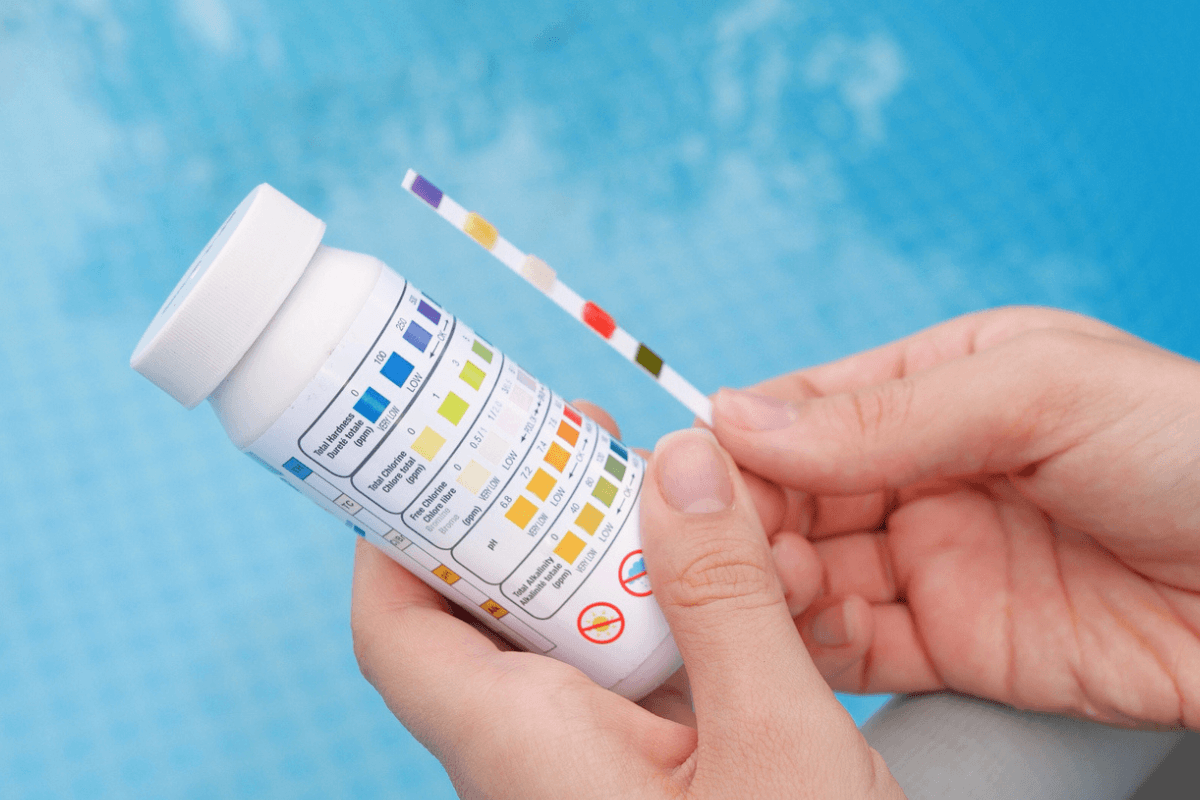
  • If you’re using test strips, dip the strip into the hot tub at elbow depth and wait for the time specified on the pack. Then compare the colour change to the chart on the bottle and record the ppm reading.
  • If you’re using a liquid drop kit, collect a water sample in a tube, add reagent drops one at a time, counting them until the colour shifts. Usually, you multiply the number of drops by the factor listed in your kit manual to get the ppm level.
How to lower alkalinity in a hot tub in 5 steps

The simplest way to decrease alkalinity in hot tubs is to use an alkalinity decreaser. But which should you use?

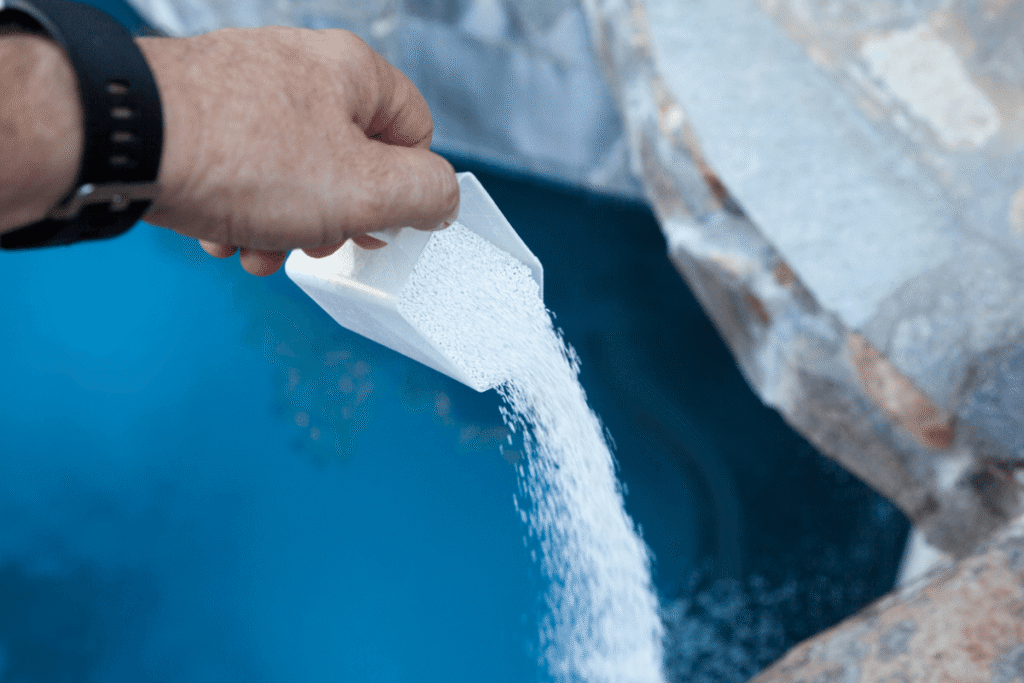
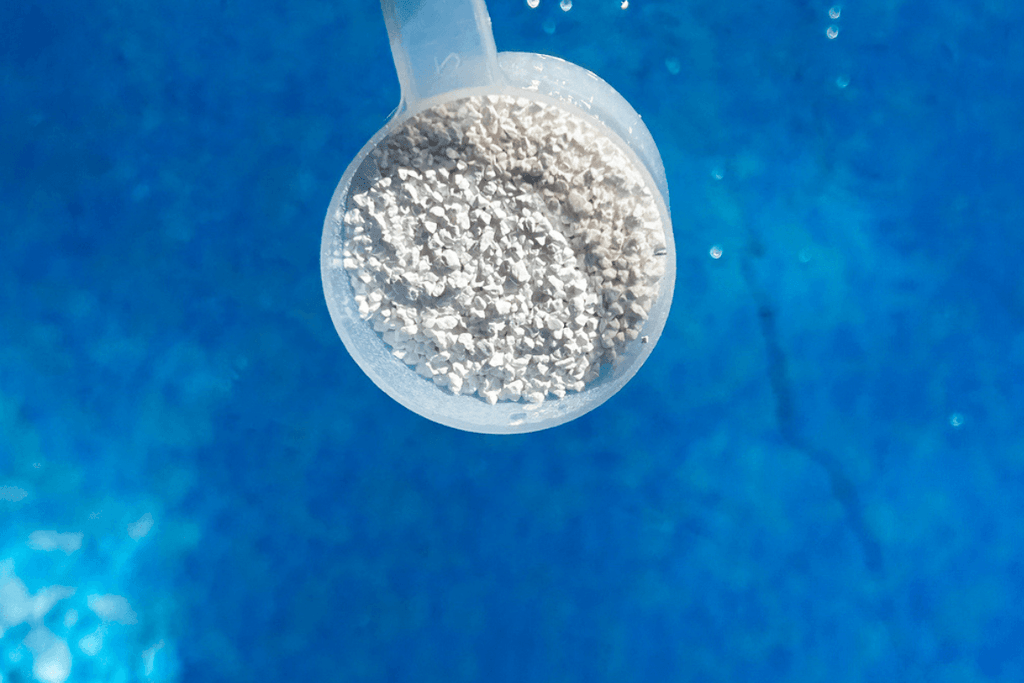
You need a sodium bisulphate chemical, usually sold as granules. It often comes under labels like pH decreaser, pH minus, or pH reducer, but always check the ingredient list.

Avoid muriatic acid, since this is better suited to swimming pools. Many people think they can use baking soda or vinegar, but baking soda actually raises TA, and vinegar is too weak. 

Here are five steps to follow:

  1. Test your alkalinity and pH. You also need to check your tub’s volume (it will be in the manual).
  2. Work out your dose. Follow the instructions on the label. For example, reducing TA by 10-20ppm usually requires about 15-25g of product per 1000 litres.
  3. Dissolve the dose in a bucket of hot tub water. Make sure the pump is running and the cover is off before pouring slowly around the edges.
  4. Let it circulate before retesting. It needs to circulate for at least 30 minutes. Then, retest after a few hours, but ideally the next day, before adding more if needed.
  5. Repeat in small doses until you’re back within range (80-120ppm).

Good to know: Acid lowers pH too, so if your pH drops below range, run the jets or air blower with the cover off to gently raise.

So, how do you lower the alkalinity in a hot tub safely?

  • Wear gloves and eye protection
  • Add chemicals to water, never the other way around
  • Use one product at a time (never mix them together)
  • Keep people out of the tub until the chemical has circulated (check the label, but usually about 30 minutes)
Common mistakes when lowering alkalinity

Most hot tub alkalinity mistakes occur when you rush the process. Here’s a full list of common mistakes:

  • Adding the whole dose at once or overshooting (and then adding countermeasures like baking soda to recover)
  • Retesting too soon, and adding more before the first dose has finished working
  • Guessing the tub’s volume 
  • Adding chemicals without knowing your starting TA level first
  • Using a US dosage chart in gallons without converting
  • Lowering pH before fixing alkalinity issues first

Maintain the right alkalinity level with Cumbria Hot Tub Services

Once you know how to reduce alkalinity in a hot tub, it’s a simple task. All you have to do is test, dose, wait, and retest. 

But if your water keeps drifting or you’d rather hand over the job to experts, our hot tub servicing team is happy to help. Take a look at our watercare plans or get in touch if you have questions.

How to increase alkalinity in a hot tub quickly 

Low alkalinity is one of the quickest ways to throw your hot tub water out of balance. Once it drops, the pH becomes unstable, water turns cloudy, and your heater, jets and shell become more vulnerable to damage. 

The longer you leave it, the worse the problem can get. Fortunately, raising hot tub alkalinity is quick, inexpensive and easy. Here’s exactly how to do it.

Why alkalinity matters for a hot tub

Alkalinity keeps your water steady. When it’s too low, your pH won’t stay put no matter how often you adjust it. A low pH leads to itchy skin, cloudy water and worn-out equipment. 

Alkaline low in hot tub? Here are the telltale signs:

  • pH reads below 7.2 no matter how often you adjust it
  • pH keeps bouncing around even after you’ve corrected it
  • Metal fittings, jets or the heater show signs of corrosion or staining
  • Water looks cloudy or foams more than usual
  • Skin feels dry or itchy, and eyes sting after a soak

Good to know: Rainwater getting into the tub and Trichlor chlorine tablets are both naturally acidic, so they’re common reasons alkalinity keeps dropping again even after you’ve corrected it. If chlorine levels are part of the puzzle too, see our guide on how to lower chlorine in a hot tub. 

Here is what happens if you leave low hot tub alkalinity untreated:

  • Corrosion. The metal fittings, heaters and pumps in your hot tub wear out faster.
  • Etched or pitted surfaces. The acrylic shell of your hot tub can be damaged over time.
  • Poor sanitiser performance. Chlorine or bromine works less effectively in acidic hot tub water.

The ideal alkalinity range for hot tubs

The recommended alkalinity range for hot tubs is between 80-120 ppm total, and a pH of 7.2-7.6. Knowing how to adjust alkalinity in your hot tub starts with understanding that alkalinity and pH are linked but not the same. You should always correct your hot tub’s alkalinity first, since fixing pH alone won’t stabilise it if alkalinity is off. 

Use the table below to see what your reading actually means and what to do about it:

How to test alkalinity in your hot tub

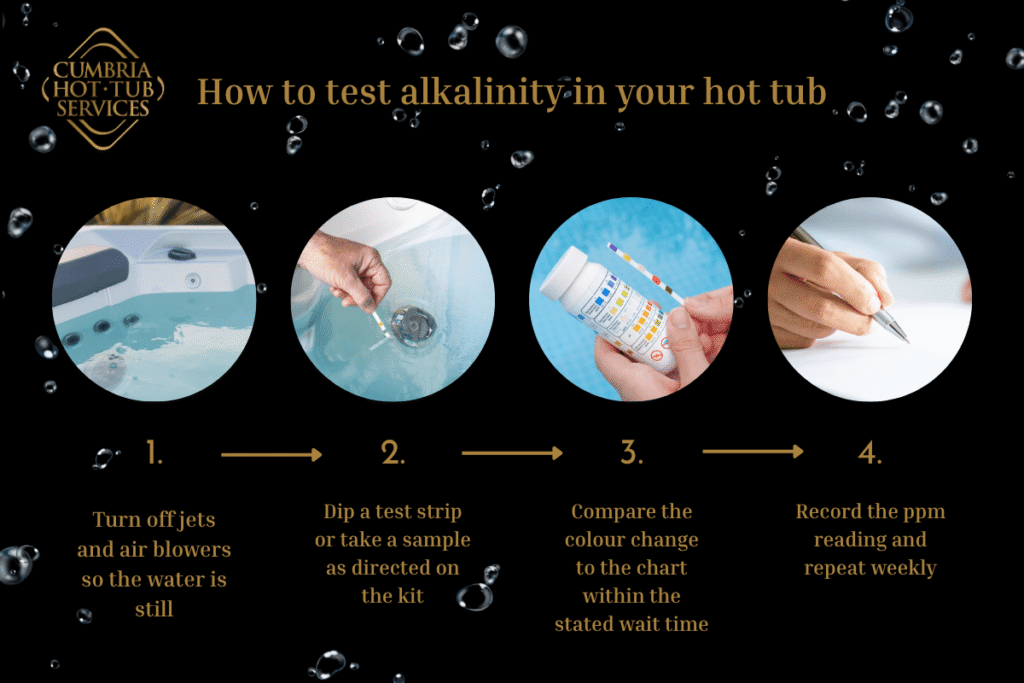
Test the alkalinity of your hot tub with test strips or a digital tester before every chemical addition – never guess the dose. 

Here are 4 easy steps to testing the alkalinity of your hot tub:

Top tip: Invest in a digital pH tester which gives a more precise ppm reading if you’re dosing regularly or managing more than one tub.

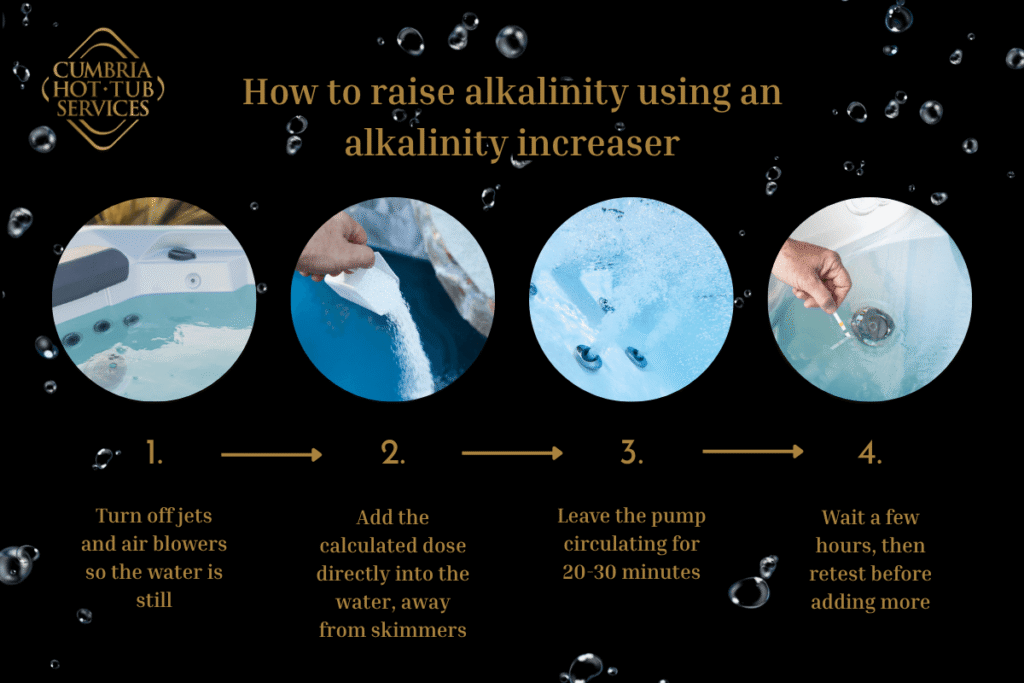
How to raise alkalinity using an alkalinity increaser

If the alkalinity in your hot tub is low, a purpose-made alkalinity increaser (sodium bicarbonate-based) is the most reliable way to raise it. Follow the product’s dosage guidance for your hot tub’s volume, plus these 4 easy steps:

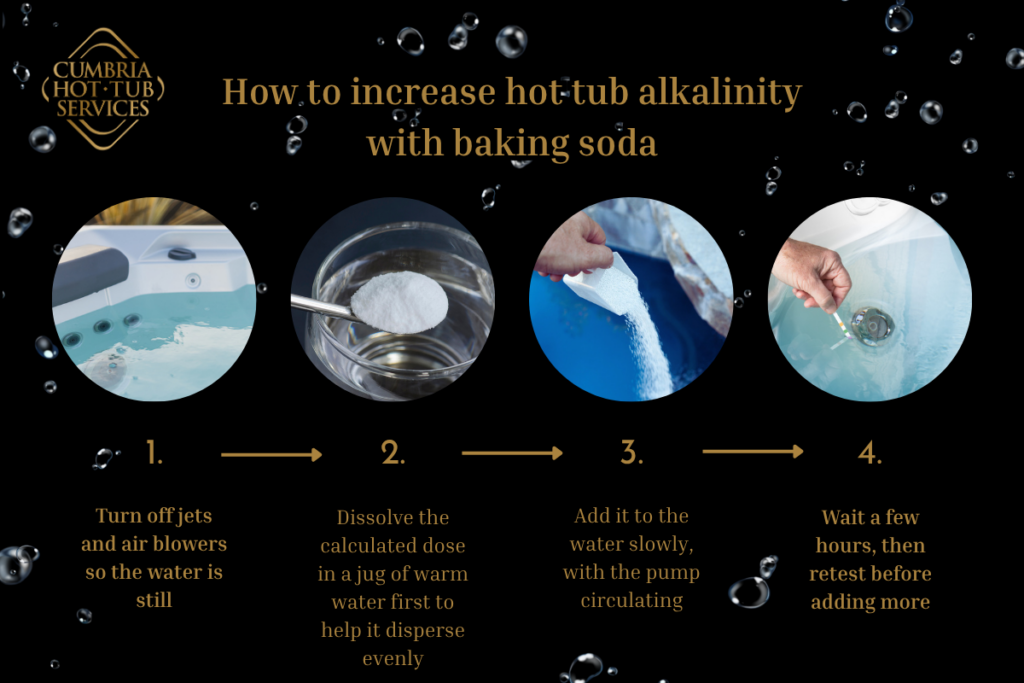
How to increase hot tub alkalinity with baking soda

You can use ordinary sodium bicarbonate to increase the alkalinity of your hot tub in the same way as a shop-bought increaser. This makes it a reliable emergency fix. As a rough guide, 1kg of bicarbonate of soda raises alkalinity by about 10 ppm per 4,000 litres, but always confirm against your tub’s exact volume. 

Follow these steps:

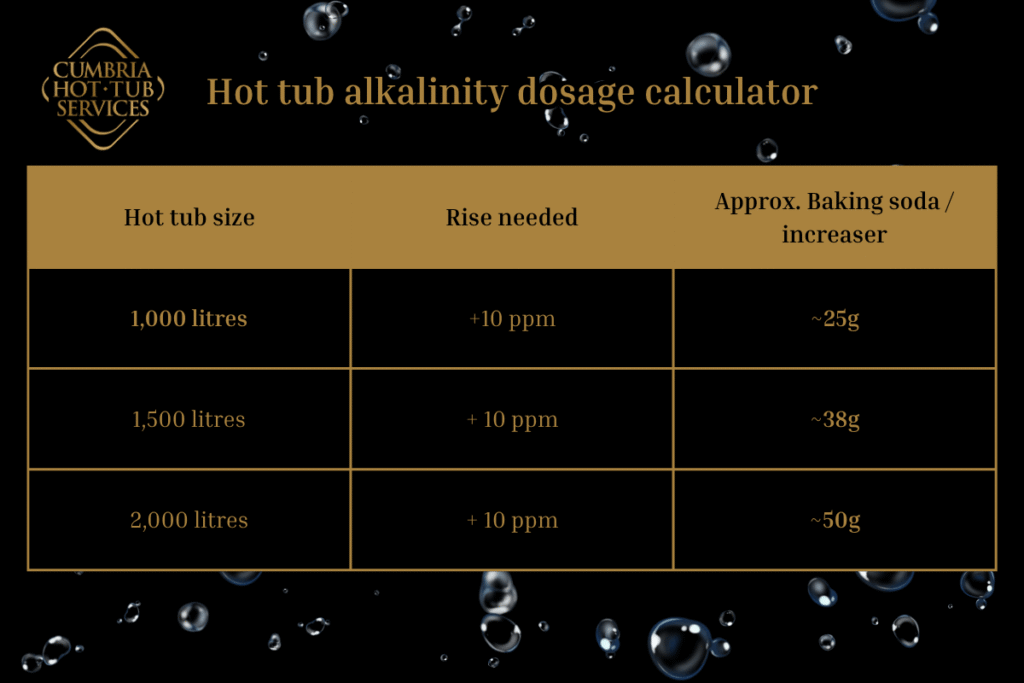
Hot tub alkalinity dosage calculator

Use the table below as a quick reference for how much baking soda or increaser to add per 10 ppm rise, based on your hot tub’s water volume.

Always check your product label – formulations vary between brands.

Common mistakes when raising alkalinity

Most hot tub alkalinity problems come down to rushing the dosage or skipping the retest. Small, patient adjustments get better results than a single big correction. The mistakes below are the ones we see most often: 

  • Overdosing in one go. Add half the dose, retest, then top up if needed; a single full dose can push alkalinity too high and trigger the scaling and cloudy water that come with it.
  • Adding chemicals with jets running. This causes uneven mixing and foaming.
  • Not retesting. Alkalinity can take several hours to fully register on a test, so dosing again too soon risks overshooting into high alkalinity and needing a reducer to bring it back down.
  • Ignoring old water. If alkalinity won’t hold after 3-4 months’ use, total dissolved solids may be too high; a full water change often resolves it.
  • Relying on Trichlor tablets alone. These tablets are acidic and will keep pulling alkalinity back down; granules or bromine are more pH-neutral.

Related reading: If your pH levels keep drifting no matter what you try, it may point to a filtration or balance issue worth a professional look. Our Hot Tub Servicing page explains how we can help.

Get it right every time with Cumbria Hot Tub Services

Getting the alkalinity of your hot tub right through trial and error wastes both time and chemicals. So why not let a professional handle it for you?

A professional watercare visit with Cumbria Hot Tub Services rules out the guesswork and ensures proper dosing, HSG282-compliant testing for holiday lets, and live updates through our Servicing Portal. 

Explore our watercare plans or get in touch for a personalised plan for your hot tub and requirements.

How to drain a hot tub: the ultimate guide

Despite draining a hot tub being a straightforward task, it can be surprisingly tempting to put it off. However, leaving the same water in your hot tub for too long can lead to cloudy water, clogged filters, poor water quality, and unnecessary strain on your spa’s components.

In this guide, we show you exactly when to drain your hot tub, how to do it safely, and a few simple tips to keep it clean, efficient, and ready to enjoy.

How often should you drain a hot tub?

Hot tub owners should drain and refill their water every three to four months, and more frequently if the tub sees heavy use. Even with the regular use, oils, lotions, and general debris accumulate in the water and pipework over time. 

No filters or chemical routines replace the need for a proper drain and clean. 

Here are some signs that it’s time to drain your hot tub:

  • Cloudy, dull, or discoloured water
  • A strong or unusual chemical smell
  • Excessive foaming when the jets are running
  • Skin or eye irritation after use
  • Sanitiser levels that won’t stay balanced, no matter how much you dose

Top tip: Keep a maintenance log of the dates you drain, top up with chemicals, and clean filters. It makes identifying patterns and planning much easier.

What equipment do you need to drain a hot tub?

Draining a hot tub properly requires a small kit of household and hot tub-specific items, plus a little patience. Let’s have a look at those items in more detail:

How to drain a hot tub step by step

Draining a hot tub is simple: turn off the power, attach a hose to the drain valve, and let the water empty before cleaning the shell and refilling it.

Here’s a breakdown of how to drain a hot tub in seven clear steps:

  1. Turn off the power at the circuit breaker. This stops the pump and heater from switching on while the tub is low or empty, which could otherwise damage the equipment.
  1. Remove the cover and take out the filters. They should be out of the way and ready for a separate clean, rather than sitting in draining water.
  1. Locate the drain valve. This is usually near the base of the shell. Attach your hose or position your submersible pump in the footwell.
  1. Direct the hose to a suitable drainage point. This could be a foul water or storm drain, or the garden. Check your local council’s rules if you plan to run water onto the garden or a storm drain, since rules around this vary by area. 
  1. Test and neutralise the water first (if draining into the garden). Use test strips to check chlorine or bromine levels, and add a neutraliser if they’re still high so the water’s safe for grass, plants, and wildlife. This step isn’t needed if you’re draining to a foul water drain. 
  1. Open the valve or switch on the pump, and let the water flow out fully. This is the slowest part, so it’s an ideal moment to clean the filters.
  1. Clear any leftover water from the footwell. Use a wet/dry vacuum or scoop it out by hand.

Important: Draining onto the garden is only suitable if the water’s been tested and dechlorinated, and kept well away from any watercourse, pond, or drain that feeds one (commonly recommended as at least 10 metres). Never let it run onto a neighbouring property, a footpath, or a paved area that drains into a public storm drainage system.

How long does it take to drain a hot tub?

Draining a hot tub typically takes anywhere from twenty minutes to a few hours, depending on the method and equipment used. The table below helps compare the key differences:

Method Typical time Notes
Drain valve and garden hose 2-4 hours Low effort and hands-off, but slow
Submersible pump 15-30 minutes Faster, but with a little more setup
Wet/dry vac for the footwell 5-10 minutes Only clears the last of the water

Top tip: A pump comes in handy if gravity alone isn’t shifting the water fast enough (or at all).

What should you do after draining a hot tub?

Once the water’s out, cleaning the shell and filters properly sets you up for a fresh, well-balanced refill. Here’s how to do that well:

  • Wipe down the interior with a non-abrasive cleaner and a soft cloth or sponge
  • Rinse thoroughly with clean water to remove any residue
  • Clean the filters separately and replace them if the pleats appear torn, flattened, or if you can’t rinse them clean
  • Check jets, seals, and fittings for wear, cracks, or leaks while everything’s accessible.
  • Close the drain valve securely before refilling
  • Refill with fresh water, run the pumps to circulate it, then test and balance the water chemistry

Top tip: Refill through the filter compartment rather than straight into the shell to help prevent airlocks in the system. If it’s been a while since your last drain, it’s also worth flushing the internal pipework, since biofilm can build up in places a normal drain won’t reach. 

Can you leave a hot tub empty?

No, a hot tub shouldn’t be left empty for any longer than it takes to clean, refill, or service it.

Left empty for too long, the shell can dry out and crack, seals can shrink, and the whole structure can warp under changing temperatures. 

Stagnant residue in an empty tub can also attract pests or grow algae. If you genuinely need to leave a tub empty, such as over winter, the pipework should be blown clear of water first. The tub should also be securely covered and protected from frost.

Let Cumbria Hot Tub Services drain and clean your hot tub for you 

Draining and cleaning your tub properly can be time-consuming. Plus, getting the chemistry, timing, or plumbing wrong can shorten its lifespan. If you’d rather hand over the hassle, Cumbria Hot Tub Services offers routine hot tub servicing across Cumbria, so your tub stays clean, balanced, and ready to use, without the responsibility falling on you.

If you’re unsure of what you need, contact our expert team to guide you in the right direction with no pressure to commit.

How to lower chlorine in a hot tub: 6 simple steps

Getting the water balance right in your hot tub can feel like a bit of a guessing game – especially when it comes to hot tub chlorine. Add too little and your water isn’t properly sanitised. Add too much and suddenly it’s harsh, uncomfortable, and far from relaxing.

In this guide, we explain exactly how to lower hot tub chlorine safely, what causes chlorine levels to spike, and how to keep your water levels spot on moving forward. First, let’s take a look at what happens when hot tub chlorine is too high. 

What happens if hot tub chlorine is too high?

Too much hot tub chlorine isn’t just unpleasant; it can actually cause a few real problems.

For you and your guests:

  • Skin irritation or dryness
  • Red, itchy eyes
  • Strong chemical smell (that “pool smell” is actually a sign something’s not right)
  • Breathing discomfort in enclosed spaces

For your hot tub:

  • Fading or damage to covers and headrests
  • Wear and tear on seals and components
  • Reduced lifespan of your filtration system

High chlorine in a hot tub can make your water feel harsh rather than relaxing, which defeats the whole point of having a hot tub.. If you hop in and immediately think, “this feels a bit much,” trust your instincts and test the water.

hot tub water service

How to lower chlorine in a hot tub safely

So you’ve tested your water and thought, “that’s a lot of chlorine for one hot tub.” 

Don’t panic! It’s a common issue that, thankfully, is usually easy to fix. Here’s how to reduce chlorine in hot tubs in 6 easy steps:

1. Stop adding chlorine immediately

Take out any floating dispensers and pause any automatic dosing systems to prevent more chlorine from entering the water while levels are already too high. It sounds obvious, but it’s the most important first step.

2. Remove hot tub chlorine tablets

If you’re using chlorine tablets for your hot tub, take them out of the dispenser straight away. They dissolve slowly, so even one tablet can keep raising chlorine levels for days.

3. Let it naturally dissipate

Chlorine breaks down on its own, especially when exposed to air and sunlight. Simply leaving your hot tub uncovered for a few hours can help speed things up.

4. Run the jets with the lid open

Running the jets increases aeration, which simply means mixing more air into the water. As the jets create bubbles and movement, they help release trapped gases, including chlorine, from the water into the air. 

This process helps chlorine dissipate more quickly, making it an easy way to bring levels down faster than just leaving the water to sit.

5. Dilute the water

Diluting is one of the quickest ways to reduce chlorine safely. If levels are very high, partially drain your hot tub and refill it with fresh water. 

6. Use a chlorine neutraliser (if needed)

For very high readings (typically anything above 8–10 ppm), a chlorine reducer like sodium thiosulfate can bring levels down fast. 

Just be careful – adding too much can swing things the other way and leave you with little to no sanitiser in the water. You’ll need to measure carefully, follow the product instructions, and retest your water after each adjustment to stay within the safe range.

Quick tip: Always retest your water after making changes. Aim for a chlorine level between 3–5 ppm for most hot tubs.

hot tub water chemicals

FAQs about how to decrease chlorine in a hot tub

How much chlorine should you add to a hot tub?

For most hot tubs, you should aim for:

  • 3–5 ppm chlorine during normal use
  • Slightly higher (around 5 ppm) after heavy use

General dosing guidance:

  • Chlorine granules: Typically 3–5 grams per 1,000 litres of water
  • Chlorine tablets: Usually 1–2 small tablets in a floating dispenser (adjust based on tub size and usage)

That said, always check the instructions on your specific product as different brands can vary.

Best practices for adding chlorine to your hot tub:

  • Add small amounts gradually rather than all at once
  • Test water regularly (at least 2–3 times per week)
  • Adjust based on usage (more bathers = more chlorine needed)

Why is my hot tub chlorine level too high?

If the chlorine is too high in your hot tub, there’s usually a simple explanation. Here are the most common causes we see: 

  • Overdosing (the biggest culprit). It’s easy to add “just a bit extra” for peace of mind – but chlorine builds up quickly when adding too much, especially in smaller tubs.
  • Too many tablets in the dispenser. Floating dispensers can be deceptive. Add too many tablets, and they’ll keep releasing chlorine long after you’ve forgotten about them.
  • Not testing often enough. Without regular testing, chlorine levels can quietly rise over several days before you notice.
  • Low usage. If you aren’t using your hot tub much, chlorine isn’t being “consumed” by contaminants, meaning it lingers and accumulates.
  • Incorrect dispenser settings. If your hot tub floater is fully open, tablets dissolve faster, releasing more chlorine than intended.
  • Small water volume. Hot tubs hold far less water than swimming pools, so even a small dosing mistake has a big impact.

Getting into a simple routine (test, adjust, repeat) can prevent most of these issues. 

Chlorine tablets vs chlorine granules for hot tubs: Which is best? 

If you want convenience, tablets are a good choice (just be careful with quantities and dispenser settings). If you prefer precision and control, granules are often the better option.

Here’s a quick breakdown of the pros and cons of each: 

Chlorine tablets Chlorine granules
ProsConsProsCons
Slow-release and low-maintenance

Great for maintaining steady levels

Ideal if you don’t want to dose daily
Easy to overdose if you add too many

Less control over how quickly chlorine is released
Fast-dissolving and easy to control

Perfect for quick adjustments

Great after each use
Require more frequent dosing

Need a bit more attention and routine

A lot of hot tub owners actually use a mix: tablets for maintenance, granules for quick boosts.

hot tub water filter change

Get your hot tub water back on track with a professional balance check 

If your chlorine levels just won’t settle, it’s often a sign of a deeper issue like imbalanced water chemistry, faulty equipment, or a build-up in older water. Constantly adjusting without results can be frustrating, and that’s where a professional service makes a real difference.

At Cumbria Hot Tubs, we regularly help customers reset their water with a full balance check, equipment inspection, and tailored advice. Our professional service includes:

  • Fully testing and rebalancing your water
  • Checking that your equipment is working correctly
  • Recommending the right products and dosing routine for your setup
  • Helping to extend the life of your hot tub

Think of it as a fresh start for your spa, so you can spend less time troubleshooting and more time relaxing. 

Reach out to the team today to book your next hot tub service, or take a look at some of the hot tubs we have for sale if you want to upgrade your current setup!